Collecting Taxonomy...
💡 Tip: Contribute to species pages to earn XP!
Collecting Taxonomy...
💡 Tip: Contribute to species pages to earn XP!
Collecting Taxonomy...
💡 Tip: Contribute to species pages to earn XP!
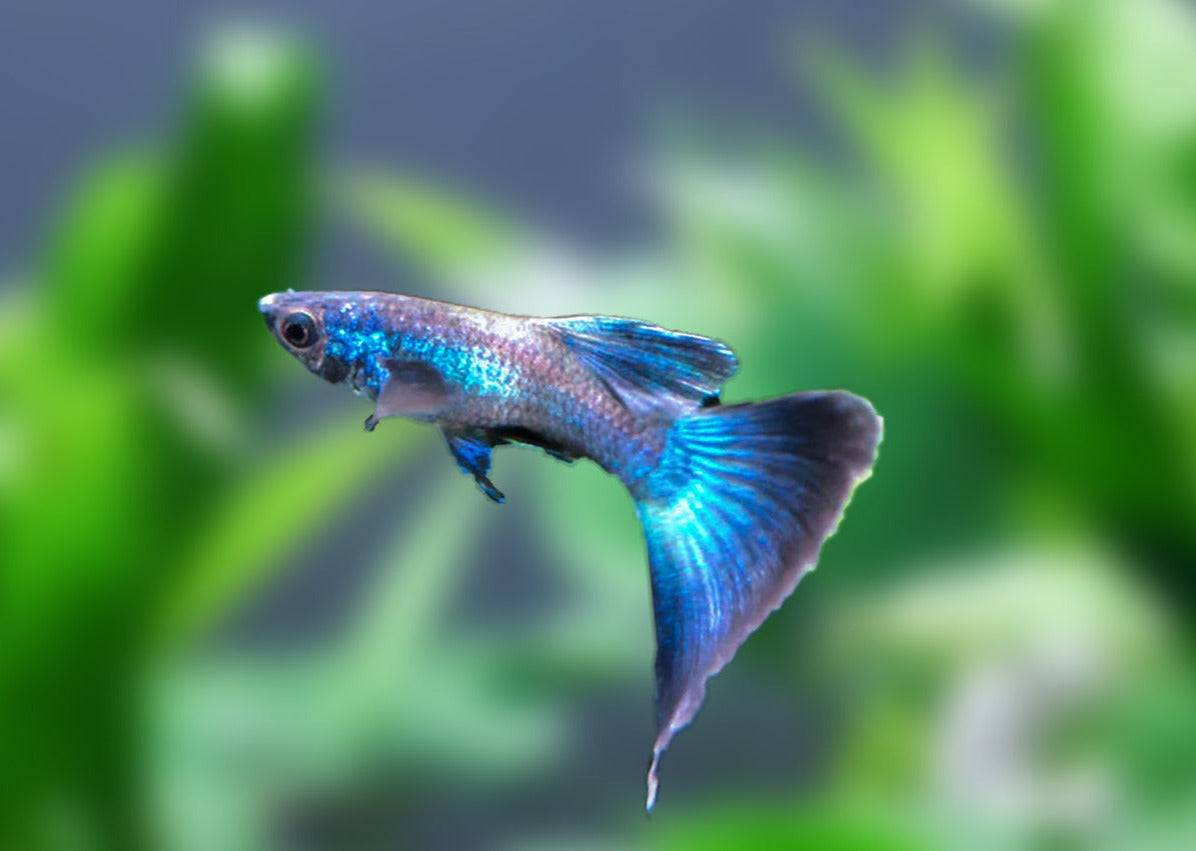
Poecilia reticulata
Also known as: Guppy
The Moscow Blue Guppy is one of the most elegant and highly prized guppy strains in the ornamental fish hobby. Known for its deep metallic blue coloration, this variety belongs to the famous Moscow line of guppies, which are characterized by solid, intense body colors that extend from the head to the tail without patterns or spots. Due to selective breeding, Moscow Blue Guppies display a rich sapphire to royal-blue sheen that appears almost velvety under proper lighting.
Scientific Name: Poecilia reticulata
Common Name: Moscow Blue Guppy
Origin: Selective breeding (derived from wild guppies in South America)
Difficulty Level: Easy to Moderate
The defining feature of the Moscow Blue Guppy is its uniform blue coloration covering the entire body and fins.
Color: Deep metallic blue, ranging from navy to electric sapphire depending on lighting and genetics
Finish: Smooth, glossy, and iridescent with a reflective sheen
Body Shape: Streamlined and slightly elongated
Fins:
Males usually have large, flowing dorsal and caudal fins
Females are bulkier with shorter fins and a duller blue or grayish tone
Size:
Males: 3.5–4.5 cm (1.5–2 inches)
Females: 5–6 cm (2–2.5 inches)
Under strong aquarium lighting, Moscow Blue Guppies often appear to glow, making them a centerpiece fish in planted aquariums.
Moscow Blue Guppies are peaceful, social, and highly active fish.
Non-aggressive and community-friendly
Enjoy swimming in groups
Constantly active and curious
Males may chase females during breeding but without serious harm
They are ideal for calm community tanks and are excellent for beginners who want visually striking fish without aggressive behavior.
Minimum: 10 gallons (40 liters)
Ideal: 15–20 gallons for a small group
Temperature: 22–28°C (72–82°F)
pH: 6.8–7.8
Water Hardness: Moderate (8–15 dGH)
Filtration: Gentle filtration preferred (sponge filters work very well)
Live plants such as Java moss, guppy grass, hornwort, and Anubias
Open swimming space with planted corners
Dark substrate enhances blue coloration
Moderate to bright lighting to bring out metallic shine
Regular weekly water changes (20–30%) are essential to maintain color and health.
Moscow Blue Guppies are omnivores and thrive on a varied diet.
High-quality guppy flakes or micro-pellets
Live or frozen foods:
Brine shrimp
Daphnia
Bloodworms (occasionally)
Plant-based foods:
Spirulina flakes
Blanched spinach or zucchini (small amounts)
Feeding Frequency:
2–3 small feedings per day
Avoid overfeeding to prevent bloating and water pollution.
A protein-rich and varied diet greatly enhances their blue coloration.
Moscow Blue Guppies coexist well with other peaceful fish.
Tetras (neon, ember, cardinal)
Rasboras
Corydoras catfish
Mollies and platies
Small peaceful shrimp (cherry shrimp)
Aggressive fish (cichlids, tiger barbs)
Fin-nipping species
Large predatory fish
Like all guppies, Moscow Blue Guppies are livebearers.
Gestation period: 25–30 days
Female gives birth to 20–50 fry per cycle
Fry are independent at birth
Ideal male-to-female ratio: 1 male : 2–3 females
Dense plants help protect fry from adults
Fry food:
Crushed flakes
Baby brine shrimp
Micro-worms
Selective breeding is important to maintain the pure blue Moscow strain, as crossbreeding can dilute the color.
Ich (white spot disease)
Fin rot (from poor water quality)
Stress-related color fading
Stable water parameters
Regular water changes
Quarantine new fish
Avoid overcrowding
Moscow Blue Guppies are generally hardy when kept in clean, stable environments.
Average lifespan: 2–3 years
With excellent care, some individuals may live slightly longer.
Moscow Blue Guppy, Guppy
Actinopteri
10
Observations
10
Countries
Data aggregates species content from multiple sources including Wikipedia, iNaturalist, GBIF, and ITIS. Content may transform over time. Wikipedia content is licensed under CC BY-SA 3.0.