The Guppy Universe
Poecilia reticulata
A Celebration of Color, Life, and the World’s Most Beloved Aquarium Fish
About This Magazine
🌈 Introduction: Why Guppies Are Special
Guppies are one of the most fascinating creatures ever kept by humans. In a body no longer than a finger, they carry rainbows, metallic shine, elegant fins, and endless variation. Each guppy is unique — no two patterns are ever exactly the same. Their peaceful nature, playful swimming, and vibrant presence bring life to any aquarium, making them beloved across generations.
But guppies are more than just pretty fish. They're survivors, storytellers, and tiny ambassadors of the aquatic world. They've traveled from wild streams to living rooms across the globe, adapting, thriving, and winning hearts along the way.
🧬 The Origin of Guppies: From Wild Waters to Your Tank
Birthplace of the Rainbow
Native to the freshwater streams, rivers, and marshes of South America — particularly Venezuela, Trinidad, Barbados, and northern Brazil — guppies (Poecilia reticulata) evolved in warm, tropical environments. They adapted to survive in both clean streams and murky puddles, developing incredible resilience.
The Victorian Discovery
In 1866, British naturalist Robert John Lechmere Guppy discovered these colorful fish in Trinidad and sent specimens to the British Museum. The fish was later named after him, though it had already been described scientifically years earlier. Still, the name "guppy" stuck — and it's the one we use with love today.
From Wild to Wonderful
Over decades, selective breeding transformed wild guppies into hundreds of varieties. Breeders in Asia, Europe, and the Americas worked tirelessly to enhance colors, fin shapes, and patterns. What started as small, modestly colored fish became living artwork. Today, guppies are kept worldwide and symbolize both beauty and simplicity in fishkeeping.
🎨 A World of Colors & Patterns: The Guppy Palette
Guppies come in breathtaking varieties, each more stunning than the last:
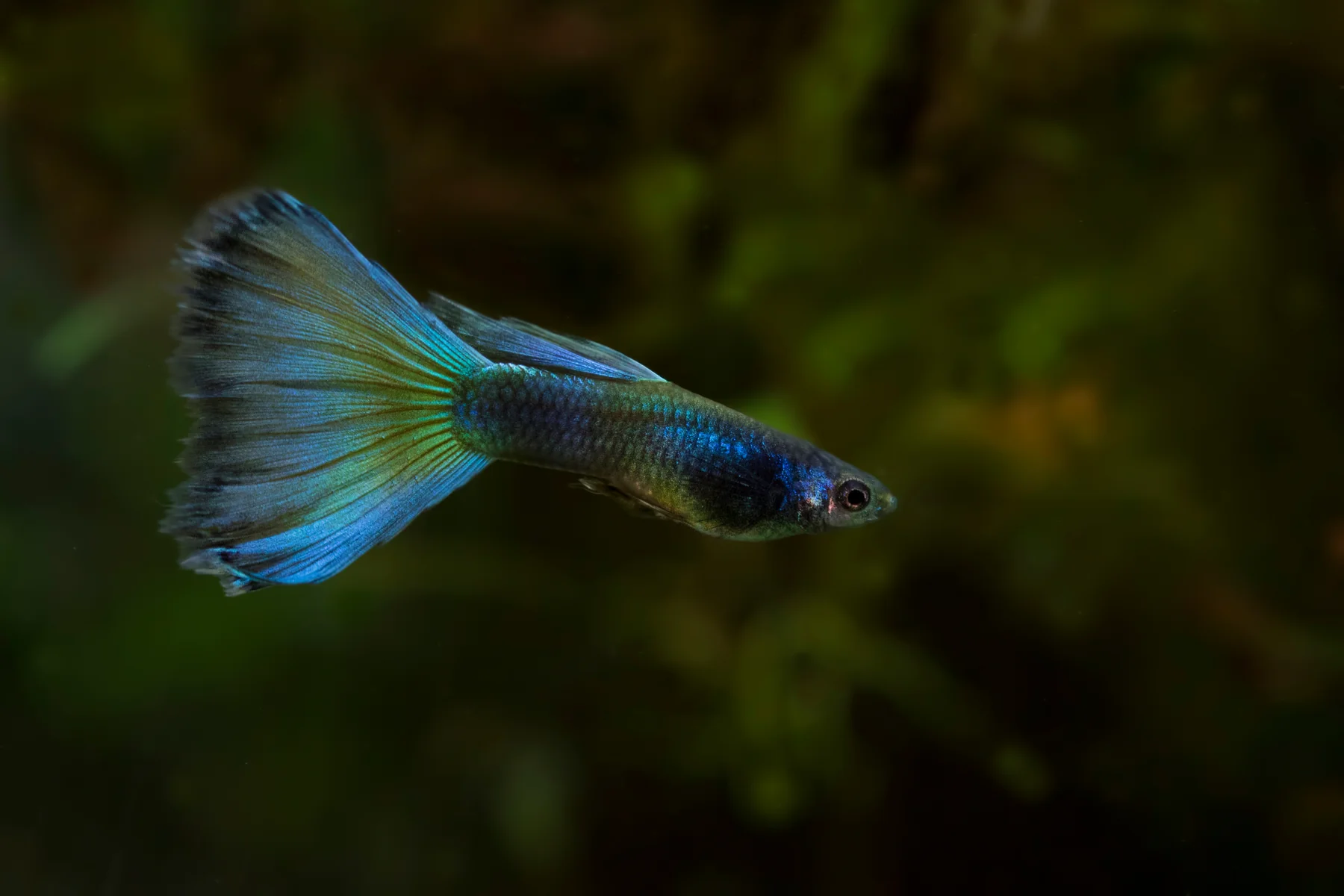
🔵 Moscow Guppies
Solid metallic blues, greens, and blacks that shimmer like polished gemstones. Moscow Blues are especially prized for their deep, intense coloration.
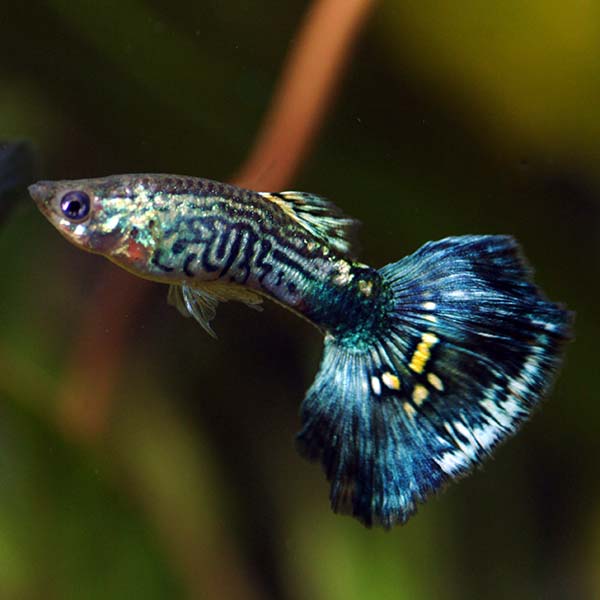
🐍 Cobra Guppies
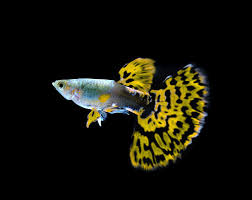
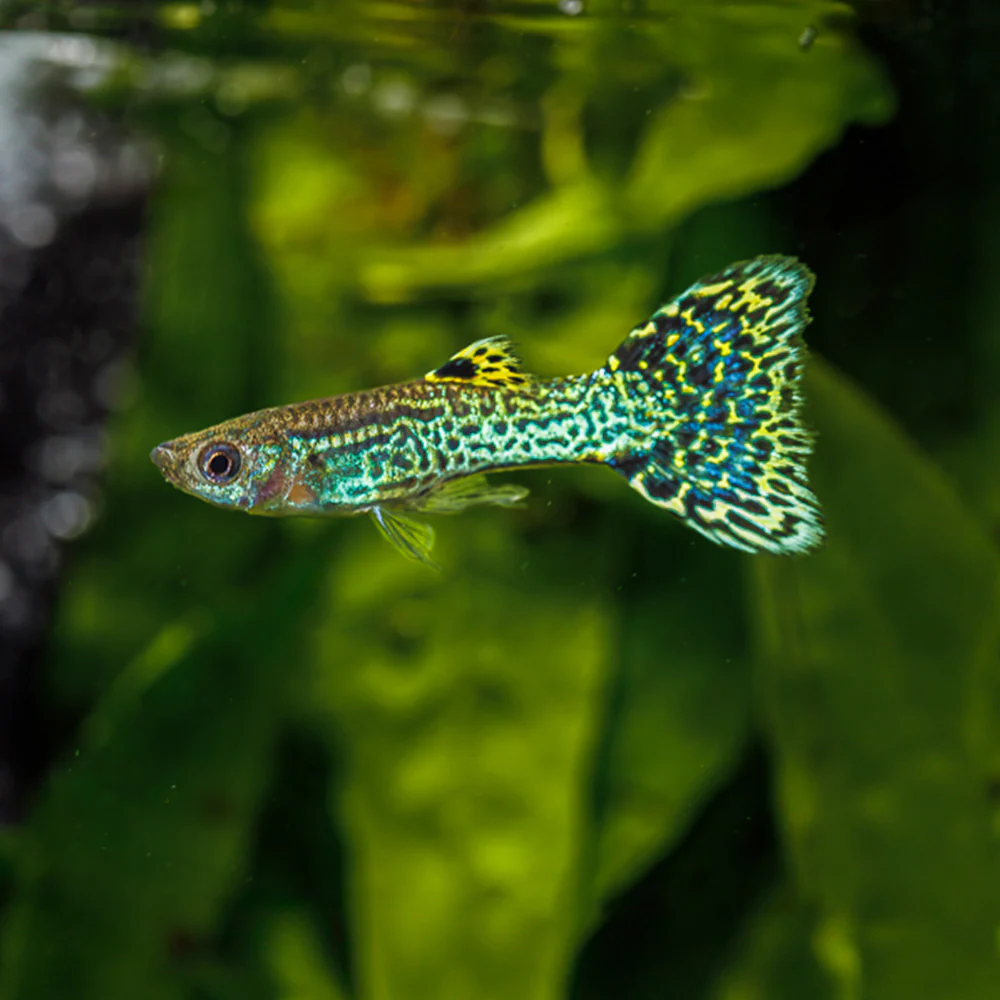
Named for their snake-skin body patterns with rosettes and vertical bars. Their tails often explode in reds, yellows, or oranges.
🖼️ Mosaic Guppies
Artistic stained-glass tails with irregular, connected patterns that look hand-painted. No two are alike.
🎩 Tuxedo Guppies
Dark rear body (the "tuxedo") paired with vibrant tails in neon colors. Classy and striking.
🌿 Grass & Leopard Guppies
Fine dotted patterns resembling leopard spots or blades of grass. Delicate and intricate.
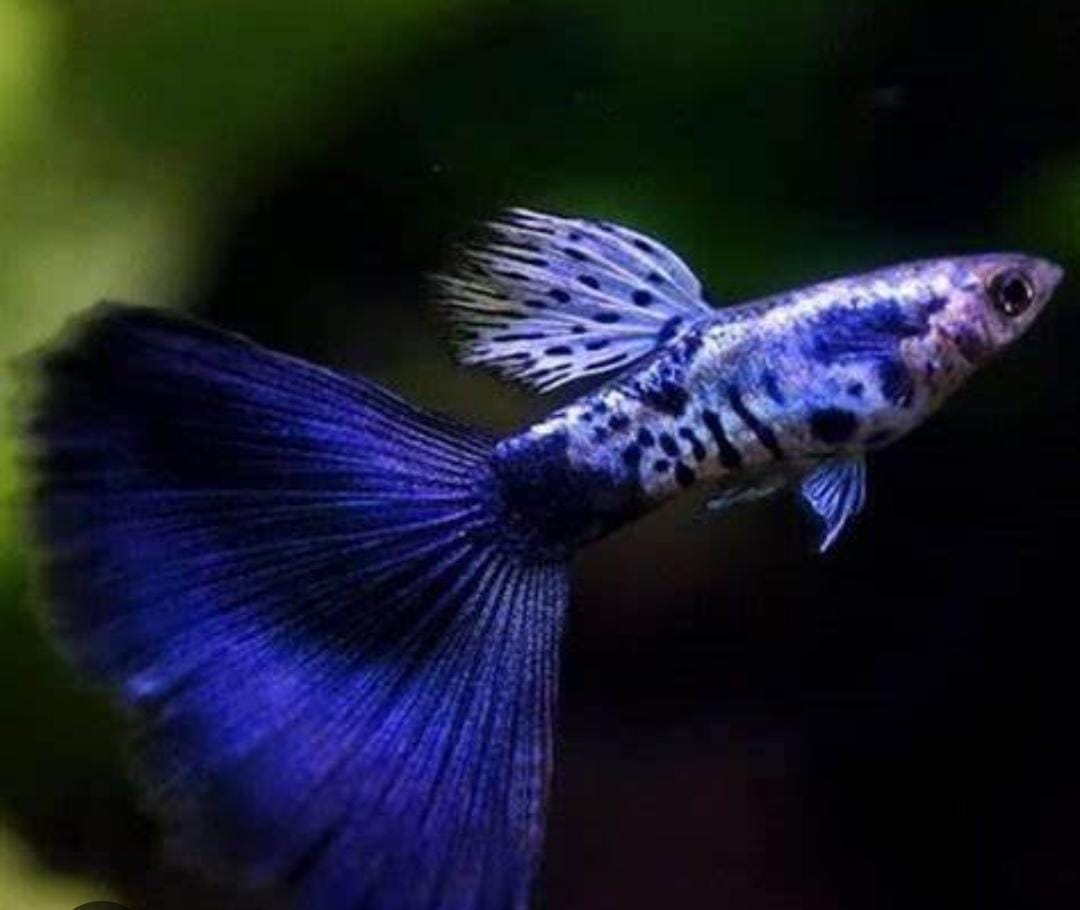
🌅 Sunrise, Sunset, and Galaxy Guppies
Named for their color gradients — warm oranges and pinks, or cosmic mixes of purple, blue, and silver.
Each variety reflects years of careful breeding, patience, and passion. Owning a diverse guppy tank is like curating a living art gallery.
🧠 Personality & Behavior: Tiny Fish, Big Character
Social Butterflies
Guppies are incredibly social. They thrive in groups and enjoy the company of their own kind. Males are known for their constant "showing off" — flaring fins and chasing females in elaborate courtship dances.
Curious Explorers
Guppies investigate every corner of their tank. They nibble on plants, peck at substrate, and even recognize their owners. Many guppy keepers report that their fish rush to the glass during feeding time, almost like puppies.
Peaceful Tank Mates
Guppies are non-aggressive and get along well with other peaceful species like tetras, corydoras, and snails. They bring energy without causing chaos.
Therapeutic to Watch
There's something calming about watching guppies glide through water, their tails flowing like silk scarves. Studies show that observing fish can reduce stress and lower blood pressure. A guppy tank isn't just decoration — it's wellness.
🐣 Breeding & the Miracle of Life
Livebearers: Birth, Not Eggs
Unlike most fish, guppies don't lay eggs. They're livebearers, meaning females give birth to fully formed, free-swimming fry. A single female can store sperm and have multiple batches of babies — sometimes up to 20-50 fry per birth — every 4-6 weeks!
The Magic of New Life
Watching guppy fry emerge is mesmerizing. Tiny, transparent at first, they dart around immediately, instinctively seeking cover. Within weeks, their colors begin to develop, revealing hints of their future beauty.
Selective Breeding
For hobbyists interested in breeding, guppies offer endless possibilities. By selecting parents with desired traits (color, fin shape, pattern), breeders can create new lines. It's a mix of art, science, and patience.
Raising Fry
Fry are surprisingly hardy. With proper care — clean water, hiding spots, and finely crushed food — survival rates are high. Many guppy keepers start with one pair and end up with generations of stunning descendants.
🌍 Guppies & Humans: A Relationship Across Continents
The First Fish for Many
Guppies are often the first fish someone ever keeps — and often the one they never forget. Their hardiness makes them forgiving to beginners, while their beauty keeps even experienced aquarists enchanted.
In Classrooms & Labs
Guppies are used in education to teach biology, genetics, and ecosystems. Scientists have studied them for decades, learning about evolution, behavior, and reproductive strategies.
Mosquito Control Heroes
In some tropical regions, guppies are introduced to ponds and water bodies to control mosquito populations. They eagerly eat mosquito larvae, helping reduce the spread of diseases like malaria and dengue.
Aquascaping Stars
In planted tanks and aquascapes, guppies add movement and life. Their colors pop against green plants and driftwood, creating living, breathing art.
Community & Connection
Guppy clubs, online forums, and social media groups connect enthusiasts worldwide. People share photos, breeding tips, and stories. Guppies build bridges between cultures and generations.
💡 Fun Guppy Facts You Didn't Know
Speed Swimmers: Guppies can swim up to 10 body lengths per second!
Color Vision: They see more colors than humans, including ultraviolet light.
Personality Differences: Some guppies are bold and adventurous; others are shy and cautious.
Record Holders: The oldest recorded guppy lived for 5 years (typical lifespan is 2-3 years).
Space Travelers: Guppies have been sent to space for scientific experiments!
🛠️ Caring for Your Guppies: Quick Essentials
Tank Size: Minimum 10 gallons for a small group
Water Temperature: 72-82°F (22-28°C)
pH Level: 6.8-7.8 (slightly alkaline preferred)
Diet: Flakes, pellets, frozen/live food (brine shrimp, daphnia)
Tank Mates: Peaceful species only — avoid fin-nippers
Plants: Live plants provide hiding spots and improve water quality
❤️ Final Thought: The Soul of the Guppy
Guppies remind us that beauty doesn't need to be large or loud. Sometimes, it swims quietly in a glass tank, flashing colors like a living jewel. They teach us patience, wonder, and the joy of caring for another living being.
In their small, shimmering bodies, guppies carry entire worlds — of color, personality, and life. They are proof that the smallest creatures can leave the biggest impressions.
Whether you're a lifelong aquarist or just discovering the hobby, guppies welcome you with open fins and endless charm.
Welcome to the world of guppies. Welcome home. 🐠💙
About Guppy
Quick Facts
- Scientific Name
- Poecilia reticulata
- Classification
- FISH
Taxonomy
- Kingdom
- Animalia
- Phylum
- Chordata
- Class
- Actinopterygii
- Family
- Poeciliidae
Created By

harishri_b_r
Magazine Creator
Gallery
Advertisement