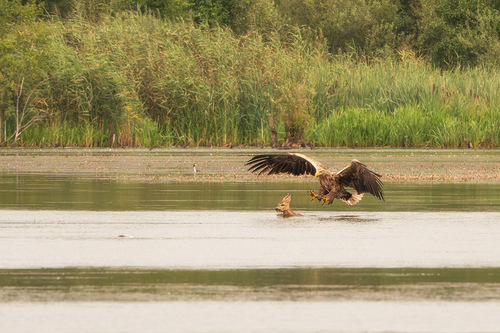
📌 Taxonomy
The first formal description of the white-tailed eagle was by the Swedish naturalist Carl Linnaeus in 1758 in the tenth edition of his Systema Naturae under the binomial name Falco albicilla. The genus Haliaeetus was introduced in 1809 by the French naturalist Marie Jules César Savigny in the Description de l'Égypte. The name Haliaeetus is Neo-Latin for "sea-eagle", from Ancient Greek hali-, "sea-" and aetos, "eagle". The specific albicilla, "white-tailed", is from Neo-Latin albi-, "white" and cilla, which is meant to mean "tail" but actually comes from a medieval misunderstanding of the Latin name motacilla for wagtails. The name originally meant "little mover", but certain writers thought it meant "wag-tail", giving rise to a new false Latin word cilla for "tail". The Anglo-Saxon name erne means "soarer", and it is cognate to Swedish örn and Finnish aarni. It has many Gaelic names, including iolar sùil na grèine or 'eagle of the sun's eye.'
📌 Systematics
, Japan]]
, Sweden]]
The white-tailed eagle is a member of the genus Haliaeetus, a monophyletic group comprising 11 living species, including the closely related Ichthyophaga fish eagles which may or may not be part of a separate genus. The latter group, comprising the lesser (Haliaeetus humilis) and the grey-headed fish eagle (Haliaeetus ichthyaetus), differ mostly in life history, being more fully devoted to fish eating and habituating wooded areas, especially in mountainous areas. In appearance the two Ichthyaetus are slenderer, longer tailed and more uniform and grey in colour than typical sea eagles. This species pair may not be genetically distinct enough to warrant division into separate genera. Other than these Ichthyophaga-type species found farther north in Asia, Sanford's sea eagle (Haliaeetus sanfordi) of the Solomon Islands is the most atypical Haliaeetus, retaining rufous-brown plumage into adulthood (this particularly resembling the white-bellied sea eagle juvenile, likely a closely related species) more typical of juveniles in other species and it also dwells more so in dense, coastal forests where it feeds mostly on birds and mammals rather than fish and water birds.
Outside of the genus Haliaeetus, among other extant forms, they appear to be most closely related to milvine kites and Old World vultures, based on modern forms from these subfamilies that broadly share morphological and life history traits with sea eagles: the Brahminy kite (Haliastur indus) (historically sometimes referred to as the "red-backed sea eagle") and the palm-nut vulture (Gypohierax angolensis) (which was once widely referred to as the "vulturine fish eagle"). The relation of these species to the sea eagles is partially borne out by their genetic sequencing. Other groups, beyond milvine kites and Old World vulture, of modern accipitrids that are seemingly in some way related, albeit distantly, to the sea eagles include Accipiters, harriers, chanting-goshawks and buteonines. Notably excluded from their relations are most other species referred to as "eagles", including booted eagles and snake and serpent eagles.
The white-tailed eagle itself forms a species pair with the bald eagle. These diverged from other sea eagles at the beginning of the early Miocene (c. 10 mya) at the latest, possibly (if the most ancient fossil record is correctly assigned to this genus) as early as the early or middle Oligocene, about 28 mya. A recent genetic study of mitochondrial DNA is consistent with this idea. Greenlandic white-tailed eagles (proposed as H. a. groenlandicus) form, on evolutionary time scales, a relatively recently founded population that has not yet accumulated many unique genetic characteristics and may not strictly fulfill the distinction of a subspecies. However, the population appears to be demographically isolated and deserves special protection. At one time an eastern subspecies (H. a. brooksi) was proposed as well but there is little evidence supporting this as more than a case of clinal variation in colouring and size (i.e. the eastern average slightly darker and smaller than more westerly ones). As in other sea-eagle species pairs, this one consists of a white-headed (the bald eagle) and a tan-headed species. They probably diverged in the North Pacific, spreading westwards into Eurasia and eastwards into North America. Like the third large northern species, Steller's sea eagle (Haliaeetus pelagicus), adults have yellow feet, beaks and eyes. Another species, likely intermediate between the white-tailed, bald and Steller's sea eagles and the Ichthyophaga type fish eagles, is the Pallas's fish eagle (Haliaeetus leucoryphus), which in life history seems to range farther from water and to higher elevations than the three northern species normally do. Due to the similar dietary and nesting habits of sea eagles, they are mostly allopatric in distribution as competition can be considerable between these eagles. DNA from a ~3,500-year-old sea eagle skeleton found in a lava cave on Maui was sequenced. Phylogenetic analyses suggested that the Hawaiian eagle represents a distinct (>3% divergent) mtDNA lineage that is most closely related to extant white-tailed eagles. Based on fossil calibration, the Hawaiian mtDNA lineage probably diverged around the Middle Pleistocene. Thus, although not clearly differentiated in morphology from its relatives, the Hawaiian eagle likely represented an isolated, resident population in the Hawaiian archipelago for more than 100,000 years, where it was the largest terrestrial predator. The reasons for its extinction are unknown.
📌 Standard measurements and sexual dimorphism
The most reliable method to sex birds is by tarsus width and depth and beak depth but these are infrequently measured. In some cases females are as much as 25% heavier and 15% greater in linear dimensions, though the sexes are rarely this discrepant in standard measurements. The exposed culmen is typically large as in all Haliaeetus, ranging from , with an average of . The average culmen length of the bald eagle is , thus averaging slightly smaller. However, the average culmen length in the large bald eagles of Alaska is considerably larger than other bald eagles as well as most white-tailed eagles at up to and can even rival the length (but perhaps not the girth) of the truly massive bill of the Steller's sea eagle.
📌 Colouring and field appearance
The adult white-tailed eagle is a greyish mid-brown colour overall. The plumage is fairly uniform over most of the body and wings, but the upper wing coverts are typically somewhat paler. In the adult, the head, neck and upper breast have a distinctly paler appearance than the rest of the plumage and most often have a buff colouration. In worn or bleached plumages these light areas can be even paler at times, ranging to almost whitish, which can render a resemblance in such eagles to a washed-out bald eagle. Some of the palest birds can appear anywhere from cream-tawny to light greyish. It is thought that in some populations perhaps paleness increases with age, although it is possible that there is an historical genetic factor to these pale variations. In contrast, some adults can also be a richer, more deeply dark brown (or somewhat rufescent) than average with perhaps a mild increase in average darkness of hue to the east of the species' range.
White-tailed eagles of all ages typically perch in quite upright positions on exposed branch, rock or other vantage point, but tend to sit more horizontally on the ground or other level surfaces. They have an ample bill with a relatively high culmen, helping to impart a rather narrow and high crowned facial look, especially compared to Aquila eagles. The neck is at times unusually long-looking, more so than in the bald eagle, which can give the upper body a vulturine appearance. The tail is relatively short, and in some adults it can appear disproportionately stubby in relation to the massive body, and slightly wedge-shaped. All ages have a well-feathered tibia but bare tarsi. In flight, the wings are extremely broad and deeply fingered, with the usual tendency for at least six fingers to be visible. Juveniles are longer tailed than adults, which is usually more evident in flying than perched birds, with sometimes a slightly bulging section of feathers manifesting on the wing secondaries. The species tends to fly with shallow wing beats; at times the wing beats can be fairly fast for a bird of this size, but interspersed at times with gliding. At a great distance, this flight style may be suggestive of a large brown heron. The wings are held flat or slightly upraised at the tip in flight and the white-tailed eagle is well known to soar extensively. This species can be surprisingly maneuverable on the wing, usually during aerial displays or dogfights with other birds. These eagles may also maneuver by half-closing both wings or fully closing one wing.
📌 Vocalizations
The white-tailed eagle is considered a vocal bird of prey during the breeding season, although some authors consider their voice "not loud or impressive for the size of the bird".
📌 Identification
Given reasonable view, adult white-tailed eagles are difficult to mistake for any other bird. There are no other eagles with fully white tails in their range except for in the easternmost limits of their range, their cousins the bald eagle and Steller's sea eagle, which in adults are different in all other respects of plumage. The Pallas's juveniles are more distinctively whitish marked on the underwing. In flight or perched, the Pallas's fish eagle are usually markedly smaller and slighter than white-tailed eagles with a longer and differently marked tail. At all ages, the white-tailed eagle averages a duller, slightly darker and browner colour overall than the Pallas's fish eagle. Pallas's fish eagles are mid-brown on the body in juvenile plumage with no paler feather edging as seen in juveniles and especially subadults of the larger species. Adult Pallas's fish eagles are immediately distinctive rufous hue with a more restricted but more sharply demarked paler buffy head. Bald eagle juveniles may be found together with white-tailed eagles in the Aleutian islands (where the white-tailed eagle formerly bred until about 30 years ago) and when vagrants of white-tails occur in Alaska. Juveniles of bald and white-tailed eagles often strongly resemble each other but the bald eagles have a shorter neck, a relatively longer and squarer tail, and somewhat less broad wings. In the colouring, the bald juvenile is similarly as dark or even darker brown above as white-tailed eagle juveniles but on the underside often has more extensive whitish mottling, especially on the underwing.
Steller's sea eagles are usually distinctly larger and longer tailed, with a taller, bulkier look in eagles standing on the ground or perched. Steller's juveniles have a different wing shape (roughly paddle-shaped) and a considerably more massive and paler bill, which is yellow even in juveniles unlike in bald and white-tailed eagles. Juvenile Steller's sea eagles are a distinctly darker soot colour than juvenile white-tailed eagles with even less whitish showing on the body than the latter species but, on the other hand, the underwing often as white marked as juvenile bald eagles (dissimilarly from juvenile white-tailed eagles), albeit in different pattern. In all three large northern sea eagles, the tail colour is similar at the various stages of development but the shape is more distinctive, especially the bolder wedge shape of the Steller's. The golden eagle usually appears slightly smaller than the white-tailed eagle and tends to be more dashing in flight, which is usually done with a distinct dihedral. When perched, the golden eagle looks more sleek and compact than the rangier white-tailed eagle and tends to be a darker, richer hue of brown. Golden eagles have a much shorter neck, with a smaller head and bill and a longer, squarer tail. White wing patches of juveniles are also differently distributed in golden than juvenile white-tailed eagles.
📌 Distribution and habitat
in Norway]]
]]
📌 Breeding range
This eagle breeds in northern Europe and northern Asia. Their range extends to as far west as southern Greenland (prevented from breeding further north due to the short summers), northern and western Iceland, and the reintroduced populations in some areas of England (re-established in 2019), Ireland and Scotland, particularly conserved coastal spots. In mainland Europe the range is expanding, with Europe's largest population breeding in coastal Norway (broadly), northern and southwestern Finland, eastern Sweden, broadly in Denmark, the Czech Republic, much of the east Baltic countries, the non-montane areas of Ukraine, eastern Slovenia, central and southern Hungary (and adjacent northeastern Croatia), sporadically in Greece, the Danube sections of Romania and Bulgaria to the Black Sea and western and eastern Moldova. The bird returned to the Netherlands in 2006 and in 2020 the number of breeding pairs had increased to 20. It might have bred in the Faroe Islands up until the 17th century, but evidence is lacking; there are only about a dozen records of vagrant white-tailed eagles from the archipelago since 1800.
In Anatolia, it only remains as a breeder in sparse and small pockets of Turkey and Georgia, taken as a region there are likely to be fewer than 30 breeding pairs in this region. Discontinuously, they are found as residents in Kazakhstan where they live in a long strip of the southern part of the country starting at the Aral Sea and the northwestern portion (but not, as far as is known, breeding in the Kazakh part of the Caspian Sea coast). Their northern limits occur in Russia to the Ob river to 70 degrees north at the mouth of the Yenisei River and on the Gyda and Yamal Peninsulas, to the Kolyma, Indigirka and Lena rivers to above 72 degrees north, even to 75 degrees north on the Taymyr Peninsula. They are said to be common around the White Sea, reportedly even the most abundant bird of prey locally and found both on coasts and inland lakes, although breeding rates are low due to the frigid weather. From Russia, breeding populations spill somewhat into northernmost Mongolia, extreme northwestern China and northern North Korea. The white-tailed eagle also breeds on Sakhalin Island, the Kuril Islands and Hokkaido, the northernmost island of Japan.
📌 Wintering range
]]
The wintering range is less well understood for the white-tailed eagle given the extreme reductions and fluctuations of northern breeding populations over the last few centuries, so that the delineation of regular wintering areas versus areas of mere vagrancy is difficult to ascertain. It is known that a small number winter on Etang de Lindre of Lorraine, France as well as an area on the border of France to Germany around Strasbourg, with vagrants seen elsewhere in France (e.g. La Hague ), as well as in Spain, Portugal and Malta. A well-defined wintering population may occur in much of the Netherlands, even with infrequent modern breeding in the northern coastal areas. A wintering population is known in western Germany from North Rhine-Westphalia to Bonn, as well as far northern Germany. Other established wintering areas are known in Europe in west-central Italy, northern Austria, fairly broadly in southern Slovakia and northern Hungary and a few protected pockets of Southeast Europe apart from the portions in the north and east where they still breed. Scattered pockets of wintering birds are known to occur too in central and southern China, into northeastern Myanmar, and more broadly and regularly in much of Northeast China. Good numbers winter too in much of South Korea and Japan down to as far as Honshu. Some white-tailed eagles even bred in Alaska on Attu Island in the late 1970s to the early 1980s (until 1984 when the last attempts were recorded) but it was not clear whether young were ever successfully fledged.
📌 Behaviour
White-tailed eagles spend much of their day perched on trees or crags, and may often not move for hours. Perhaps up to 90% of a day may be spent perched, especially if weather is poor. Also, they will alternate periods of soaring with perching, especially flying over water or well-watered areas, but do considerably less soaring on average than do golden eagles. Pairs regularly roost together, often near to their nest, either on a crag or tree or crevices, overhung ledges or small isolated trees on a crag.
📌 Migration and dispersal
The white-tailed eagle may be considered a rather inconsistent and partial migrant. The species seldom migrates in the western part of its range, with eagles even breeding as far north as Greenland, Iceland and coastal Norway not moving at all for winter, but for some southward juvenile movements following dispersal. Juveniles overall are more migratory and dispersive and leave natal areas sooner, which is by August–September in northwestern Europe and return later, by March/April, than adults do. In contrast, young from Finland and Sweden tend to distribute to the southwesterly direction to the shores of the Baltic Sea. One from Finland was recovered west in northern Norway and another was found as far south as Bulgaria. In several parts of Russia, quite unlike many European populations, the white-tailed eagle seems to be largely migratory. In the White Sea area, southward moments begin in September with most white-tailed eagles being gone by November but in mild winters some adults may remain behind. Some white-tailed eagles from the White Sea were found well over away to the west, in countries such as Hungary and Italy. Return spring migration to the White Sea is by February–March. During winter, whether long-distance migrants or short-distance dispersers, white-tailed eagles tend to become gregarious, especially younger immature birds. Many such groups can contain up to 10 and, in areas near large breeding populations such as the Scandinavian countries, up to at least 30–50 individuals. Wintering congregations at the Baltic coast and on the River Elbe from 37 winters show that arrivals begin in November, with numbers peaking in January and then declining during March and early April. Although juveniles usually return to their natal area some apparently overshoot these areas, such as those returning to Romania or on the Black Sea which have been recorded north of their natal site and northeast of their natal site.
📌 Territoriality
Territory size in white-tailed eagles may vary from , usually less than , per one estimate. While territorial behaviour is known in well more than half of all modern birds, essentially all predatory birds of different lineages are particularly strongly territorial because the live prey necessary to feed a family, including the female of the pair (which must remain near the young for them to survive) and the young themselves, tends to be sparser. Furthermore, appropriate habitat is needed in which to execute this hunting and also, of course, to build a nest with some security. Although a relatively gregarious raptor, especially among wintering birds and juveniles and immature birds, they are territorial and intrusion by a male in adult plumage often provokes vigorous fighting, in which either combatant can even die. In some cases, these vicious fights can cause damage to the nest as the two fighting eagles plummet down trying to slash at each other.
📌 Dietary biology
, Scotland]]
The white-tailed eagle's diet is varied, opportunistic and seasonal. Prey specimens can often include fish, birds and, mostly in a secondary capacity, mammals. Especially during the winter (and opportunistically in all seasons), many birds of the species live largely as scavengers, usually by coming across available carrion or watching for the activity of corvids, vultures or other raptors. In addition to trees, they may also use crags, hillocks or high grassy tussocks as hunting perches so long as the perch provides a good overall view of the environment. White-tailed eagles also regularly pirate food from otters and other birds including cormorants, gulls, ospreys, corvids and various other raptors. From studies of captive white-tailed eagles, daily food requirements were estimated at , which is equivalent to about 10% of the birds' body weight, with crop contents commonly of . Some semi-captive juveniles on the isle of Rùm, Scotland could eat up to in one sitting. From 26 accumulated food studies for this species, prey remains and pellets show that about 48.5% of the diet is made up of birds, 39.95% by fish, 9.95% by mammals and 1.6% by other foods. In total, more than 300 prey species are known throughout the bird's range. However, based on studies of prey remains and pellets in laboratories from Greenland white-tailed eagles, birds were shown to be biased in both kinds of remains (pellets and prey remains) whereas in situ study and direct nest observation favour fish. Going on pellet/remains alone here in Greenland from 557 items in the 1979 study, 68% of the diet would have been represented by birds and only 20% by fish but comprehensive observation shifted it to show fish were the primary food at 58% and birds were secondary at 30%. This study claimed this is often because the bones of fish are dissolved by the large digestive tract of the eagles upon consumption and may thus leave almost nothing in remains and to some extent in pellets. Subsequent studies here showed a much stronger preference for fish in Greenland by 1983, as fish comprised an extreme 91.8% of 660 items. However, this kind of direct continuous observation of food deliveries to nests is not always possible.
During winter, mammal prey can become more important in foods locally, as indicated in Scotland and shown in Norway and eastern Germany. Among both fish and bird prey, it is thought that a majority that are caught weigh between . However, the mean prey sizes caught can show greater variability. Three studies showed that mean prey size varied from in the Wigry National Park, Poland, in the Rybinsk Reservoir, Russia and in the Volga-Kama Nature Reserve, Russia. Thus, the mean prey size falls just slightly short of the mean prey mass of the golden eagle, which globally averages about .
📌 Fish
Overall, nearly 70 species of fish are known to be taken from throughout the white-tailed eagle's range. While healthy, large fish are often taken as well, white-tailed eagles often take out sickly, injured, or already dead fish. In some cases, the fish prey will float to the surface when infected by fish tapeworm, as is often the case with some fish families such as carp. Fish are also caught after being battered, injured, and killed at power plants, from large-scale fishing nets, or are taken directly from human fishermen. Similarly, studies have indicated that fish less than are taken infrequently, since they have a lower yield, fish of up to are taken secondarily and fish between are preferred since they have the highest nutritional benefit. Fish taken can exceed but since they can start to considerably exceed the weight of the eagle itself, they may prove too heavy to carry. Since they do not have the waterproofing oils on the plumage of the more accomplished raptorial diver, the osprey (Pandion haliaetus), white-tailed eagles prefer not to get their feathers wet as it can take a long time for them to dry. This may also make them vulnerable to losing their catch to other white-tailed eagles since their flight may be impaired until the wings are dried. Therefore, when hunting fish, they will fly to a feeding perch or nest as soon as possible most of the time.
The most frequently recorded prey species in 18 food studies from across the range is the northern pike (Esox lucius), present in at least 16 of those studies. Pike was found to be the main prey species in both the Baltic Sea and Lapland in Sweden, at three breeding locations in Finland, in two studies from Germany, and in Belarus. The maximum representation of pike known was in Lapland, where they comprised 38.2% of 809 food items. While an average mature weight for a pike is around , white-tailed eagles often attack larger-sized pike, with an estimated average weight range of . The largest pike taken by white-tailed eagles were even estimated to weigh around . The next most widely reported fish prey species is the common bream (Abramis brama). This bream was reported in 10 of 18 dietary studies and was the main prey in the Polesie State Radioecological Reserve, Belarus, in the Ural Mountains region of Russia, and in the Kostomuksha Nature Reserve, Russia. Breams taken by breeding eagles at Augustów Forest, Poland ranged from in weight.
Many varieties of fish are taken opportunistically and randomly, as opposed to pike and bream, which can locally appear to be selected out of proportion to their regional population. In Norway, of 524 fish prey items, the common lumpsucker (Cyclopterus lumpus), which averages up to but is usually smaller, made up 24% of fish taken and the Atlantic wolffish (Anarhichas lupus) made up 17% of fish taken. However, fish were secondary to birds overall in Norway. Fish similarly were important to nesting eagles in Hokkaido, Japan where 54% of 533 prey items were fish, led by the Alaska pollock (Gadus chalcogrammus) at 18.4%. In different studies of the Danube Delta of Romania, from 44.6% to 79% of the diet comprised fish, led by the common carp (Cyprinus carpio) and Prussian carp (Carassius gibelio). Similarly, in Podlaskie Voivodeship, Poland 55% of all the identified fish species brought to the nest were common carps, up to in weight with the mean mass of . However, there are reports that white-tailed eagles managed to catch extreme sizes of carps, up to in weight.
📌 Birds
s wishing to scavenge it.]]
White-tailed eagles are known to prey on about 170 species of bird, the most diverse group in their prey spectrum. White-tailed eagles usually have less success hunting dabbling ducks because their normal predator response behaviour is to take flight. In one instance, a mallard was caught while flying in mid-air, but usually the much larger eagle is unable to capture ducks in flight. While somewhat less swift in flight, healthy geese can usually outpace a heavier eagle as well and one bean goose (Anser fabalis) was even recorded to have defended itself successfully against an eagle's attack even though this goose was injured. They've also been seen to attack numerous waterfowl when the birds are injured by buckshot from duck hunters. As an opportunistic predator, it often takes young birds freely as well as adult and fledged juvenile birds. In general, due to different nesting situations, white-tailed eagles instead of dabbling or diving water birds usually attack the more conspicuous or open nests of gulls, those of several other types of seabird, large corvids or other accipitrids. Cases of white-tailed eagles eating eggs, instead of nestlings or older birds, is considered rare. Nonetheless, they have been recorded eating a few eggs, which they may carry in their beaks rather in their feet, of some seabirds such as kittiwakes, eiders, other anatids, auks, cormorants, gulls and coots.
The most widely recorded avian prey species and, second most widely recorded prey species behind the pike, is the mallard, due to its circumpolar range and commonality in many wetlands areas. Otherwise the pale plumage of adult male common eiders while they're diving is reported to make them more vulnerable to eagle attacks. There is evidence that a growing white-tailed eagle population is having a net negative effect on eider numbers in some areas, and locally eiders have altered to partial nocturnal foraging apparently to avoid hunting eagles. In inland regions, an avian prey species preferred by white-tailed eagles is the Eurasian coot (Fulica atra). The coot is the second most widely represented bird prey species (and fourth species of any class known overall) in 18 dietary studies. More than a dozen gulls are known in the prey spectrum from the smallest to all four largest extant species. In the United Kingdom, northern fulmar (Fulmarus glacialis) are noted as a common prey species and as such may contribute to locally high levels of DDT and PCB chemicals in nesting eagles. Alcids such as murres tend to become especially important in the diet of eagles in coastal Norway during winter, especially near offshore islands, when coastal fish tend to move to deeper waters. In Fennoscandia, they are attracted to coastal waters during winter to attack large numbers of diving ducks including eiders, common goldeneye (Bucephala clangula), goosander (Mergus merganser) and red-breasted merganser (Mergus serrator), tufted ducks (Aythya fuligula) and scoters. Year around in Åland, 66.2% of 5161 food items were birds, while in the three sites in different parts of Finland birds made up 51.1% of 3152 food items. They will take many goslings during summer, as greylag goslings alone can comprise up 23% of the seasonal bird prey. Fully-grown greylag geese up to , especially infirm individuals are also taken in other seasons. White-tailed eagles are also known to attack and prey on other geese, ranging in size from the red-breasted goose (Branta ruficollis) to the non-native Canada goose (Branta canadensis). Goslings and juveniles are usually targeted, but adult geese are also taken, especially while incubating or weakened by various reasons. In the Estonian island of Hiiumaa, home to at least 25 pairs of sea eagles, as many as 26 individuals have been observed simultaneously culling a single cormorant colony. Similarly large numbers were taken of the Japanese cormorant (Phalacrocorax capillatus), which was the second most numerous prey species, making up 11.63% of 533 prey items in Hokkaido, and opportunistically, when their north Atlantic colonies are accessed, great numbers of northern gannets (Morus bassanus). Vagrant white-tailed eagles in Hawaii were recorded to prey on several Laysan albatross (Phoebastria immutabilis) and were suspected to prey on black-footed albatross (Phoebastria nigripes), both weighing about .
While land birds are a more infrequently part of the diet, at least 60 species have been recorded in the white-tailed eagles prey spectrum. On one hand, small bird prey may be under-recorded since they leave few conspicuous remains but, on the other, are unlikely worthy of much pursuit as they have little food value. However, in one case, a white-tailed eagle was seen to fly into a murmuration of Eurasian starlings (Sturnus vulgaris) and come away with a starling in hand. The only passerine family taken in numbers would be the larger corvids, of which eight species are known in the prey spectrum. In Hokkaido, Japan, two species of corvid were well-represented in the diet, the large-billed crow (Corvus macrorhynchos) and the carrion crow (Corvus corone), which together comprised 14.8% of 533 prey items.
📌 Mammals and other prey
prey]]
Mammals are usually a quite secondary component of the diet. Although usually better represented than other non-fish and birds prey, their regional importance is variable. A similar contribution of European hares (Lepus europaeus) was found in the diet of Austria, where hares were the leading prey species making up 24.35% of 349 prey items (with mammals making up 34.67% of the overall diet). As large prey, they can make a hearty contribution to the prey biomass when available juveniles are attacked as much if not more so than adult rabbits and hares.
The most widely reported mammalian prey known usually as a supplemental prey species are rodents, especially the non-native muskrat (Ondatra zibethicus), which averages about , and may be taken from "muskrat farms" or feral wetland populations. While largely a supplemental prey item, a respectable number of 137 were recorded in the diet from Finland. Also, a study on the Ili delta in Kazakhstan has shown up to 30–43% of prey remains at eyries to consist of muskrat in spring and autumn but only 14% in summer (for unknown reasons). The smallest rodents known in the prey spectrum are the common vole (Microtus arvalis) and the wood mouse (Apodemus sylvaticus) but mammalian prey down to the size of common shrews (Sorex araneus), indeed the smallest vertebrate known to have been preyed upon, has been recorded. The largest rodents taken by white-tailed eagles are nutria (Myocastor coypus) and kits of Eurasian (Castor fiber) and introduced North American beavers (Castor canadensis).
in Estonia]]
More than a dozen ungulate species have been found in the foods of white-tailed eagles, but a large proportion of this is likely from carrion found already dead. Wild ungulate species known to have their young attacked by white-tailed eagles in variable numbers may include deer such as reindeer (Rangifer tarandus), red deer (Cervus elaphus) and European roe deer (Capreolus capreolus) and wild boar (Sus scrofa). Boar made up 7.1% of the prey remains at Polesski Reserve, Belarus. A yearling juvenile male eagle scaling , newly reintroduced into the wild on the isle of Rùm killed a healthy, red deer calf within a couple of days. A 2024 report by Scotland's Nature Agency analysing the dietary remnants within several nests showed clear evidence of lamb predation and/or scavenging (although no incidence of shetland pony foal predation (a question being actively debated in the summer of 2025)).
Prey of other animal classes is rarely taken by white-tailed eagles. Particularly, the diversity of reptiles known in the prey spectrum, at only six species, is quite paltry when compared to the many species known to be hunted by the bald eagle. Further among amphibians only two species of toad are known to be taken. The Ural mountains is the only region where some diversity of reptile and amphibian species have been reported in their diet. However, the miscellaneous shells of marine mussels and snails found in Norway are probably usually consumed secondarily from the stomachs of eiders. An exceptional number of insects, amounting to 24% of food items by number, were found in the foods of white-tailed eagles in Augustów Primeval Forest, almost entirely Odonata. The source of this food is not clear as the white-tailed eagle is far too large and bulky a raptor to invest much time in pursuit of insects.
📌 Interspecies predatory relationships
by a pair of common buzzards over the Isle of Canna]]
As the largest eagle in the majority of its distribution, the white-tailed eagle is an apex predator in its range. In some areas it may compete with other large raptors, especially golden eagles. Relations between these two species are complex and variable. to the contrary of owls and several other predators which often adhere fairly strictly to a size-based dominance hierarchy. Golden eagles won all food conflicts over carrion observed by one author over the course of two winters in Norway, with the white-tailed eagles only displacing goldens after the golden eagles had already fed for some time. However, cases of white-tailed eagles winning food conflicts have been reported as well and perhaps more assured mature white-tailed eagles may fare better in such conflicts. Some territorial conflicts in Scotland have escalated, albeit rarely, to both eagle species killing the other.
s.]]
Beyond golden eagles, white-tailed eagles may live alongside a wide range of other large raptors, but other eagles are considerably different in dietary and habitat preferences, so there is almost no competitive effect. A more direct effect may be detected on other fish-eating birds, for example recovering numbers of white-tailed eagles in Lithuania was thought to limit local osprey populations. However, in similar habitats, white storks and lesser spotted eagles (Clanga pomarina) appeared to not be competitively effected. Besides competitive effects, white-tailed eagles may adversely effect ospreys by habitually robbing them of their catches. Although the Steller's sea eagle may be somewhat favoured in wintertime food conflicts given its sometimes considerably larger size, both it and the white-tailed eagles have been observed to win conflicts over fish, with golden eagles sometimes entering the fray and sometimes losing or winning conflicts. Given their larger population and farther current range into warmer areas (whereas the modern white-tailed eagle is only common in cold, northern climes), bald eagles (the ecological equivalent of the white-tailed eagle in North America) have a considerably broader prey spectrum than white-tailed eagles that ranges well over 400 species, with more species recorded from nearly all animal taxon. Although about 56% of the bald eagle's diet is comprised by fish, bald eagles often take a higher diversity and numbers of alternate prey such as mammals, reptiles and amphibians than do white-tailed eagles.
Although other birds of prey are seldom caught, given that they are wary, fast and can defend themselves well, the white-tailed eagle can be characterized as an opportunistic predator of such birds. Given the difficulty of this prey type, white-tailed eagles are likely to attack other birds of prey when the victims are distracted, whether by migration on windy days, nesting duties or when trying to capture their own prey, are previously injured or they may even capture one while the raptor tries to mob the eagle. Certainly, nestlings and fledglings can certainly comprise a large fraction of the birds of prey caught as well as adult ones. lesser spotted eagle (Clanga pomarina) and eastern imperial eagle, and Eurasian eagle owl (Bubo bubo).
White-tailed eagles occasionally prey on mammalian carnivores. American mink (Neogale vison) was introduced as a furbearer to Finland but then became an invasive pest, as a fast-breeding killer that threatens many native species. In turn, Finnish white-tailed eagles have become the main natural control and may inhibit the mink from breeding via heavy predation. Conversely, the white-tailed eagle has not been known to prey on the critically endangered, native European mink (Mustela lutreola) (perhaps due to its shier habits) which the American mink are known to have been outcompeting in some areas (but the European has mainly declined due to massive overhunting by humans as a furbearer). A few species of native mustelid, including stoats (mustela erminea), European polecats (mustela putorius), pine martens (Martes martes), sables (Martes zibellina) and even European otters (Lutra lutra) can be taken infrequently. Among canids, pups of Arctic foxes (Vulpes lagopus) are the sixth most regular prey species in Greenland, Several red foxes (Vulpes vulpes) were taken or scavenged in Norway and Finland, and suspected predation on red fox have been reported in Belarus and Slovenia. White-tailed eagles are also considered predators of raccoon dogs of all ages, as well as scavenging their carcass. White-tailed eagles are known to prey on seal pups but most are likely sickly and perhaps both adult and pup seals are most likely to be eaten as carrion. Four Baikal seal (Pusa sibirica) pups were taken in Lake Baikal. Successful attacks on young common seal (Phoca vitulina) weighing up to have been observed.
As true apex predators, healthy adult white-tailed eagles have no known natural predators. However, there have been reports of eagles losing their lives after accidentally attacking non-prey animals. In one instance, a white-tailed eagle reportedly tried to attack an adult common seal but was immediately dragged into the water and soon surfaced dying with a broken wing. Similarly, in one anecdote, an eagle drowned while apparently attacking an adult harbour porpoise (Phocoena phocoena).
📌 Breeding
===Courtship and mating===
The breeding season is from January to July in the south of the white-tailed eagles range, and from April to September in the northern part of their range. Nuptial displays may occur almost year-around in some parts of the range, increasing after young disperse in autumn, thence at rare intervals until spring when such behaviour, of course, peaks. When locally common, 2–3 pairs can be seen displaying in the sky quite near each other but each pair in fact are within a border of a well-defined territory. In eastern Germany, densities were reported as 1.6–2 pairs per . Norwegian nests appear at no closer than ; territory size on Norwegian coasts were reported as roughly . Fischer noted 8–9 pairs on the small Norwegian island of Nord-Fugløya due to its huge seabird colonies, with late summer numbers boosting to 75 eagles, all within an area of only . Five occupied nests were noted on an stretch of the Russian Yenisei River. Mating chiefly occurs between mid-March and mid-April in most parts of the range. The pair may copulate be about once every 20 minutes for several hours. Prior to mating, a more skilled and graceful flying than usual may be undertaken by the male as the final stage of courtship. After his final display, the female crouches low, almost flat, with her head and neck outstretched, wings half open, and tail held level with the rest of the body. Mating has been recorded in white-tailed eagles to occur almost anywhere including a low perch, on the nest, on the ground or even on frozen lake surfaces, usually close to the nest at least but also at as far away from the nest as in Norway. Sometimes both members of the pair will assume the female's typical mating position simultaneously side-by-side until he jumps on her back. Once the male mounts he often calls loudly and flaps both wings to maintain his balance. After about 12 seconds he dismounts and sits quietly, ultimately will do so about 5 to 6 in 1.5 hours and at nearly any time of the day.
📌 Nest characteristics
. Despite the preferable location, it is likely an alternate nest.]]
White-tailed eagles most often nest in large trees, with perhaps coniferous trees preferred and nests may be in a high main fork, on the canopy or a large side branch. 80% of German nests were described as being in forests but eagles exhibited preferences for wooded islands or promontories and most nests were usually towards edge of open space: a clearing, marshy ground or even agricultural land. Among the few eyries in open land were never more than away from woods. Only one cliff nest was recorded in Germany, on the Baltic island of Rugen. Older records indicated ground nests also recorded in the German Baltic region. Most German nests were at heights from off ground in the main fork of trees, rarely on ample horizontal tree branches. Nest height in Hokkaido was similar to that in Europe at above the ground. Nest height on cliffs can be over above the nearest flat ground. Tree nests may be lined with lichen, moss, seaweed, ferns, grass, woodrush, heather or Empetrum; many tree nests may be lined with sheep's wool. In Norway, pairs of ravens, peregrines and white-tailed eagles have been known to successfully nest on the same cliff face. Many small species of bird may nest in the immediate area of white-tailed eagle eyries, presumably due to incidental protection: Eurasian tree sparrow (Passer montanus), white wagtail (Motacilla alba), Eurasian treecreepers (Certhia familiaris), common redstarts (Phoenicurus phoenicurus), European crested tits (Lophophanes cristatus), Eurasian starlings and stock doves (Columba oenas). Like in the golden eagle, pairs of white-tailed eagles often build multiple nests on their home range over time and use them randomly over different years (sometimes using one for several consecutive years or changing nests every year over several years). The species may build from 1 to 11 nests, averaging 2.5 in Norway with pairs with up to five nests being not uncommon in that country.
📌 Eggs and incubation
]]
]]
Individual white-tailed eagles tend to be remarkably consistent on egg-laying times from year to year, seemingly regardless of surrounding weather conditions. Clutch size in Scotland averages 1.56, while in Norway it is 2.16.
Average egg dimension seem to keep in accordance with the female body size, smallest mean size known were from Turkey where the average dimensions were to the largest in three surveys from Greenland, where they were . In 54 eggs from Scotland they ranged from , averaging , in height by , averaging , in width. In comparison, 90 eggs from mainland Europe ranged from , averaging , by , averaging . Eggs may be compromised quickly by frost and snow in relatively early clutches. Incubation starts as soon as the first egg is laid. In the species, a 2–3 day interval between the first and second egg being laid (as well as hatching) is recorded. The female does up to 80–90% of incubation and all known nighttime incubating. However, in Norway, the male of a pair could contribute up to about 27% of incubation to daylight hours. There may be as many as 11 changes of the incubating individual within a day. The longest period recorded the clutch was unguarded was 20 minutes, although one pair perched nearby the nest without incubating for 48 minutes. The clutches in Norway left alone only 2–4% of the time. In some cases female may do all the incubation alone, however. When the female is off the nest, she sometimes kills prey and returns with a full crop, but prey capture during incubation is often up to the male. Late into incubation, shift changes decreases and the female will sit tight and will crouch down at the approach of a human rather than leave the nest. Calling and displaying are reduced during incubation, but occasionally both may leave the clutch and display still. The time range for incubation can vary from 34 to 46 days, but usually are between 38 and 42 days. A calculated mean time range for incubation of 38.3 days.
📌 Hatching, development and fledgling
, Germany]]
In 1983, it was listed that brood size is one 56.5% of the time and two 40.8% of the time in eight studies from different parts of the range; only 2.5% of these studies had a brood size of three and only one from Norway was a brood size of four recorded. From 14 studies, the mean number of chicks in a brood may range from 1.1 in western Germany to 1.9 in southern Kazakhstan, with average overall brood size of 1.52. However, these datasets may be skewered lower than natural brood size as a majority these are from the mid to late 20th century when pesticide use considerably lowered the mean number of hatchlings in many parts of the range. New hatchlings will weigh about but in Hokkaido new hatchlings were surprisingly notably heavier at . The sex of nestlings can be identified using field methods, or using DNA. Initially, the hatchlings have a creamy white down which is longest and whitest on the head and often dirty greyish on wings and rump. Before they start walking about the nest, their underside may have several bare patches.
The nestlings first become audible at around 2–3 days and have become active enough to move around the nest and excrete over the nest edge by 10 days old. The initial down is replaced by a thick woolly coat of longer, coarser greyish down, which is usually darker on the crown, underparts and flanks. The legs and cere at this young nestling age can range from pinkish to pale yellow. By about 30 days the first feathers poke through the down. The eaglets can feed themselves starting at 35–40 days. At six weeks (40 days) they are more firm on their feet and between this and the following week feathers take over the down, with patches of down remaining but usually gone by the seventh week. Wing flapping begins only when the wings are partially feathered at 42 days. Around seven weeks of age, the eaglet is more alert and stronger and frequently manipulates sticks and walks more so. At eight weeks, only the long feathers of the wing and tail have yet to develop fully and eaglets tend to start exploring the surrounding branches. The eaglets will attempt their first flight at about 70 days and will usually be flying well by about 90 days of age. Fledgling occurs around mid- to late July in Norway, and about 3–4 weeks later in Russian White Sea.
The female of the white-tailed eagle pair seems to do all the brooding early on and will be especially reluctant to leave the nest as well. Thereafter, at 14 to 28 days, brooding behaviour by the female gradually declines. The male may start to brood occasionally around this time period but will not do so at night. Females may sit on the nest or shelter the fledglings from rain even 28 days after fledging but usually such behaviour is much reduced. Chicks may be fed as many as 11 times in 24 hours by the female who usually dismantles prey brought by the male. To 28 days, male continues to do most of the prey capture but thereafter female does much of it and both parents begin to leave kills on the nest for the eaglets to consume. As the chicks grow older, favoured food often switches from fish to birds to meet their increasing food requirements as well as prey behaviour as waterfowl may be flightless during eclipse. Caches are often depleted quickly late into nestling development. At start of fledgling, 4–5 carcasses may be brought in a week but by the end of fledgling, only one or two are usually brought, probably to encourage the young to start their own prey captures. After leaving the nest, the young usually stay nearby for another 35–40 days and may still be largely fed by their parents but gradually learn to take their own prey. In continental Europe, the young eagles are gone from the nest as early as the beginning of July to about 10 August and fully independent by late August. In this late summer stage, they may learn quickly to feed on stranded fish or to capture ducks flightless in eclipse. Juvenile eagles may remain for a long time on their parents range and apparently are not resented or repelled even to the ages of 1–3 years. However, usually by their first winter they will have congregated with other unrelated juveniles. In regions where many gather during the winter and spring, such as parts of Scandinavia, communal roosts of immatures can maintain up to at least 30–50 white-tailed eagles usually in trees or steep slopes of offshore islands; during the summer immatures are more likely to occur singly. Sexual maturity is reached at 5–6 years of age.
📌 Nesting failures and longevity
Normally, white-tailed eagles succeed in raising one or two young from a clutch of two, and two from a clutch of three. Despite claims to the contrary, Single cases were reported in the White Sea and Iceland, and it may occur situationally as in many birds of prey when prey populations are low or prey capture is inhibited by poor weather. Siblicide can be avoided in white-tailed eagles with manipulative techniques, which may include taking out and hand-rearing the runt, put a chick into a nest with slightly younger brood which it is about the same size as, or taking the first egg out and putting it back in later so it develops evenly with its younger sibling. Surplus chicks are sometimes removed from nests to use in reintroduction programs in areas where the species has died out. If left in the nest, they often die sooner or later, as with most large eagles. In such programs, the birds are raised in boxes on platforms in the tree canopy and fed in such a way that they cannot see the human supplying their food until they are old enough to fly and thus find their own food.
Known natural predators of white-tailed eagle eggs and nestlings include red foxes, martens and bears, especially if nesting in overly accessible rock formations, while wild boars have been recorded eating eggs and nestlings that have fallen out of the nest too early. Avian predation, overall a seemingly rare occurrence, of white-tailed eagle eggs and nestlings have been reported as crows, common ravens, and western marsh harriers, which are likely to succeed in cases where nest attendance is low or if successful in driving away the parents via fierce mobbing. Following better protection in the Nordic countries and other regions, studies point to a considerably higher survival once fledged. For example, in Norway and Finland, studies showed that, in the 1990s, about 80% or more survived their first two years. In eastern Germany, of 194 white-tailed eagles found dead between 1946 and 1972, of those where cause of death could be determined, 39% had been shot, accidents (especially powerlines) accounted for 6%, territorial disputes 7.5% and conservatively 13% were from poisoning. A male white-tailed eagle that was ringed as a chick on the Isle of Skye in 1994, was recorded on the Isle of Mull in early 2022 at the advanced age of 28 years old. His mate, a female white-tailed eagle that hatched in 1992 on Mull, will now be 30 years old although her identity has not been confirmed. Comprehensive ringing records from Germany since the 1980s have shown that a typical wild lifespan is up to about 30 years, exceptionally up to about 35. The oldest known is a female that was ringed as a chick in northern Germany in 1985 and has been part a highly successful breeding pair in southern Denmark since at least 2006. She still paired with the same male at the same location in 2022 and they also fledged a young that year; at 37 years old, she is showing some signs of her age in both colour and feathering.
📌 Relationship with humans
📌 Extirpations
The white-tailed eagle formerly bred over much wider area, extending west to much of western Europe and perhaps south almost continuously in that region to the Mediterranean. From the 19th century, the species underwent a huge, well-documented decline. Ultimately the white-tailed eagle was almost extinct in Europe, extirpated from all but Fennoscandia (mainly remaining in Norway) and some sparse patches of eastern Europe. They were extinct in the entire British Isles by the early 1900s. Two pairs that nested in the Jordan Valley ceased to breed, apparently due to agricultural chemicals, in the early 1950s. The species also once bred in northern Syria but is not found reliably there even in winter in modern times.
📌 Causes of decline
In Britain, the opinion towards white-tailed eagles became negative in sync with the creation of farmland and commercial fishing, as it was quickly perceived that they were competitors for resources and could deplete the livelihood of flocks for shepherds, which is largely untrue and game animals for gamekeepers. Therefore, laws were passed to facilitate their destruction. Already by the end of the 18th century, down from breeding in all appropriate habitat, the English population was down to only localized breeding, namely in the Isle of Wight, Lundy, Isle of Man and (probably) near Plymouth; within a couple of decades the species only remained in the Lake District. Elsewhere in Europe, persecution rates in the 19th and 20th century were just as drastic. In Romania, more than 400 white-tailed eagles were killed in two decades by a single hunter. In fact, the species was found to have the highest concentration of DDT of any European raptor. Egg shell thickness was found down from prior to 1935 from 1969 to 1975 down to only , a 16% reduction. In Sweden, coastal birds were considerably more effected by DDT than the inland birds of Lapland, Sweden. It was estimated that pesticides and metal contaminations reduced the white-tailed eagle population in Hungary from 1957 to 1967 by about 50–60%. Despite regulations on their usage, lead and mercury poisonings were found to be the cause of death of 61 white-tailed eagles found in Germany from 1993 to 2000.
📌 Conservation measures
]]
In order to offset the numerous chemical and metal based poisoning that humans were inadvertently exposing the species to, a widespread operation was undertaken to feed white-tailed eagles uncontaminated foods in Sweden. Here, carcasses from slaughterhouses placed in areas free of human disturbance, usually fields, bogs, marshes or frozen lakes, from October to March (after these months, the eagles will ignore carrion in favour of capture of live prey). Apparently, breeding success improved from 29% to 44% when the program began. In southern Sweden subsequent to the feedings, 5 of 11 breeding pairs were successful and two previously unoccupied territories were taken over by new pairs, thus winter feeding was seemingly highly beneficial to local eagles. Similar winter feeding stations set up in Finland from 1972 to 1978. In Sweden, brood size has varied from 1.3 per nest prior to 1950, down to 0.3 in 1965–1985. Now the brood sizes have increased, at somewhat less than one brood size on average, but still somewhat less productivity than historical numbers.
In several parts of the European range, especially southern Scandinavia and central Europe, protections have allowed white-tailed eagles to recolonize former parts of their range. Similarly, regulations on lead usage in hunting has been inconsistent in comparison with the stronger efforts to ban lead bullet fragments in North America. The residuals of mercury from various fungicides (now banned), air particles and pollution run-off water have caused huge concentrations in fish of many different areas, which continues to effect humans as well as entire ecosystems of wildlife. Unfortunately, methylmercury is still difficult to manage in Europe as it is elsewhere.
📌 Reintroduction
, Scotland, from the population of reintroduced birds of Norwegian stock]]
The first attempts at reintroduction in Scotland were in 1959 in Glen Etive, Argyll abortively, followed by a better informed but also ultimately unsuccessful attempt on Fair Isle in 1968. In August 2008, an additional fifteen chicks raised in Norway were released at a secret location in Fife, in expectation of reintroducing the species to the east coast of Scotland as well. Breeding success of reintroduced birds in Scotland (from 1975–1985 & 1993–1998) is moderate compared overall in species, in 1982–1992: productivity was 0.38, with a mean fledgling number 1.61. In comparison, for the years 1993 to 2000, productivity was 0.61 and fledgling number was 1.48, while in 2000–2007, productivity was 0.7 and mean fledgling number 1.44. Overall in Britain, there were estimated 36 breeding pairs in 2006, 40 in 2008 and at least 134 in 2022. Juvenile survival rates are somewhat low overall compared to other areas.
The white-tailed eagle is also being reintroduced to Ireland, where its Irish name of Iolar Mara (sea eagle) reflects its historic association with the island's long coast. The Irish programme was begun in the summer of 2007. Fifteen to twenty young eagles from Norway are being released each spring into the Killarney National Park in the south-west of Ireland. This comprehensive project will last a number of years, with many more eagles being released. The species has a rich history on the island but became extinct in Ireland in the 1900s due to persecution from landowners. The last pair bred on the coast of Mayo in 1912. In 2007, a hundred local sheep farmers gathered at Kerry airport to protest against the eagles' arrival. Irish Farming Association Hill Committee chairman Mr O'Leary said he had no doubt the eagles would take lambs. Since their reintroduction seven eagles have been confirmed poisoned in County Kerry, two suspected of having been poisoned, and one shot. A 13th eagle released in Kerry was shot in Northern Ireland. Twenty more eagles were due for release in 2010. However, Dr Allan Mee, in charge of the sea eagle project, stated "the continuing loss of eagles to poisoning had cast a shadow over the future of the ambitious programme." The first white-tailed eagle breeding pair since 1912 nested one hundred years later on Lough Derg (Loch Deirgeirt), marking a great success for the Irish reintroduction programme. In early May 2013, the first eaglets were born in Ireland since the re-introduction programme began; one in the Killarney National Park and two in County Clare. In Spring 2015, five nests hatched chicks in four counties in Ireland – Clare, Cork, Galway and Kerry.
and subsequently preserved for display. It may be seen at the Somerset Heritage Centre (TA2 6SF). It was presented to the county museum by Miss Bailey, the executrix of the owner's will, in 1881.]]
In 2019, a reintroduction project on the Isle of Wight was approved by the British government. It is hoped that establishing a breeding population in the coastal county will lead to the species re-colonising the South Coast. Following the release of six juveniles on the island in 2019,
In May 2021, the group leading the Isle of Wight reintroduction project, the Roy Dennis Wildlife Foundation, were given permission by Natural England to start a second reintroduction project, this time in Norfolk, thus reintroducing the white-tailed eagle to East Anglia. Up to 60 birds were to be released over a span of 10 years at Wild Ken Hill in West Norfolk but the project was cancelled after the estate withdrew. Wild continental birds are increasingly seen in East Anglia.
📌 Current status
Densities of white-tailed eagles have greatly increased in some parts of the range due to conservation efforts. Some threats still remain, notably illegal persecution by gamebird shooting and egg thieves in Scotland. The Norwegian population in 2008 was claimed to have stood at 9,000–11,000 pairs, much larger than prior estimates, and indeed this may refer to the total number of individuals rather than total breeding pairs.
Beyond the threat of chemical poisonings, a new threat from wind turbines is emerging with significant mortality (considerably in excess of the area's population productivity) occurring at the Smøla Wind Farm in Norway. From 2005 to 2010, 36 birds were killed by wind farm on the isle of Smøla, including four of the 45 recent radio-tagged fledglings. Breeding attempts within of the wind farm were considerably reduced in success. The white-tailed eagles of the region seem to have no behavioural avoidance capabilities, as in many raptors, since the blades are not visible at close range. In a recovering population in north-east Germany, a trade-off between the distance to neighbouring breeding pairs and to the nearest water body (the birds' favoured foraging habitat) was found. This indicates that pairs may be increasingly selecting suboptimal habitats to reduce competition as the population increases, and has implications in the management of such populations.
White-tailed eagles have re-established themselves as a native breeding species in numerous countries: Austria (now breeding in extreme northwestern portions), Denmark (where broadly re-established as breeders), the Czech Republic and Slovakia (scattered pairs in both now with reintroductions factoring in the Czech Republic), Hungary, and Bulgaria. the breeding population increased from none in 1995 to at least 37 pairs by 2011. In Hungary, re-establishment (starting from none in the 1970s) has also been a success, where 114 out of 166 breeding pairs by 2007 were successful producing altogether 182 fledged young. Wintering Hungarian population may now reach about a thousand eagles. In Lithuania, back in 1985 no pairs were known to have bred but established pairs numbered 90 by 2007 and swelled to 120 by 2011. On 22 May 2006, it was announced that a pair of white-tailed eagles breeding in the Oostvaardersplassen nature reserve in the Netherlands had arrived on their own, not as a reintroduction. This was the first time the bird has bred in the Netherlands in living memory. In 2007, 2008 and 2009 the eagles returned to their nest. The Dutch national forestry, which owns the reserve, installed a webcam trained on the nesting eagles. In 2010, it turned out that the white-tailed eagle was also breeding in the Zwarte Meer nature district and in the Lauwersmeer area. There is also a confirmed case of breeding white-tailed eagles in the Biesbosch. Currently (2023), there are over twenty pairs breeding in the Netherlands. They have been spotted at Poole Harbour in Southern England.
Studies of microsatellite and mitochondrial DNA in white-tailed eagles from north-central Europe have shown that the recovering European population has retained appreciable amounts of genetic diversity, implying low risk of inbreeding depression (a serious concern in species with low population density). Therefore, recovery of this formerly endangered species is a true success story for nature conservation. The story also shows how local protection of a species can be successful and important for preserving the species' evolutionary potential. As of 2013, the IUCN estimated the total population of mature breeding white-tailed eagles at 20,000–49,999 individuals.
📌 Heraldry
White-tailed eagles are prominent in ancient Saxon folklore and artwork with many landmarks named after the species. It is believed to be the white eagle shown in the Polish coat of arms. The sea eagle is often blazoned grasping a fish (usually a pike) in its talons, distinguishing it from other eagles.
File:Herb Polski.svg|The white-tailed eagle is depicted in the Polish coat of arms
File:Kumlinge.vapen.svg|The white-tailed eagle in the coat of arms of Kumlinge, Åland
📌 Prehistory
On Orkney, Scotland, sea eagle bones have been found in 6,000-year-old burial mounds, among them the Tomb of the Eagles, suggesting that the birds were revered by the prehistoric people there, a belief strengthened by the Pictish stone carvings of sea eagles from Orkney. Cut marks have been found in white-tailed eagle talons in Krapina, suggesting Neanderthals' use of jewellery.
📌 Folklore
In the Shetland Isles, Scotland, fishermen believed that as soon as a sea eagle appeared fish would rise to the surface, belly up; this led to some fishermen using eagle fat, smeared on their bait, to increase their catch.
📌 Cited works
*
*
*
*
*
* }}
*
* . The authors' reservations about using the generalized "2%" rate of molecular evolution have since proven to be well founded.