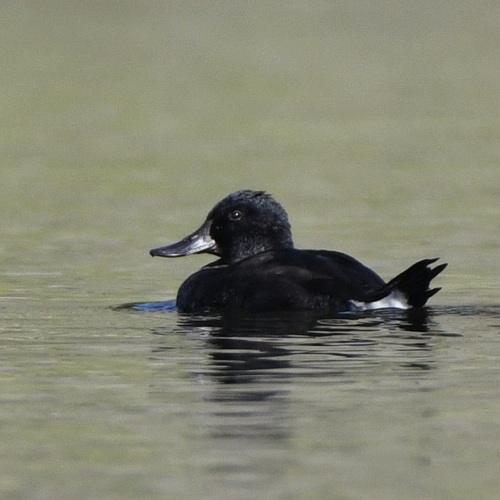
The ruddy duck is a species of duck, one of six extant species of stiff-tailed duck. In the 1940s, the ruddy duck was introduced to the United Kingdom, where it established a population. Outside the Americas, the ruddy duck is considered a highly invasive species, prompting many countries to initiate culling projects to eradicate it from the native ecosystem.
📌 Taxonomy
The ruddy duck was formally described in 1789 by the German naturalist Johann Friedrich Gmelin in his revised and expanded edition of Carl Linnaeus's Systema Naturae. He placed it with the other ducks, geese and swans in the genus Anas and coined the binomial name Anas jamaicensis. Gmelin based his description on the "Jamaica shoveler" that had been described in 1785 by the English ornithologist John Latham from a specimen that he had received from Jamaica. The ruddy duck is now placed with five other species in the genus Oxyura that was introduced in 1828 by the French naturalist Charles Lucien Bonaparte. The genus name is derived from Ancient Greek oxus, meaning "sharp", and oura meaning "tail". The specific epithet jamaicensis means "from Jamaica". The Andean duck was formerly considered to be conspecific with the ruddy duck but with the two species split, the ruddy duck is monotypic: no subspecies are recognised.
📌 Vocalizations
Both male and female ruddy ducks are not known to be very vocal most of the year, though they do become more vocal when courting and raising young. Males are known to produce short "aa-anh" calls and other noises in short bursts. Female ruddy ducks have a much higher pitched call, often having a "raanh" sound when communicating with their brood, squeaks when chased by males, and hisses and nasal sounds towards intruders.
📌 Behaviour and ecology
=== Breeding and habits ===
Unlike other migratory anatine courtship where partnerships occur in wintering grounds, ruddy ducks often begin courtship on the breeding ground. Both male and female ruddy ducks have been observed interacting aggressively with each other but despite aggression, pairs can be seen loafing next to each other minutes later. Their breeding habitat is marshy lakes and ponds.
Both male and females are not known to be very vocal with quacks, though males are known to produce a distinct drumming sound by beating their lower mandible on their breast. This drumming beat is done hard enough that often swirls of bubbles will appear in the water. This display is known as "bubbling". The female will incubate the eggs for 23–26 days whilst being protected by her mate.
They are migratory and winter in coastal bays and unfrozen lakes and ponds.
📌 Feeding
Ruddy ducks mainly feed on a large amount of plant matter like seeds and roots as well as aquatic insects and crustaceans. A large portion of the animal matter consumed is larvae and pupae. During the winter, they often consume a higher amount of animal food. The food foraged is done underwater, an activity that the ruddy duck excels at. They forage by straining food from the surface of the substrate, moving their bills side to side whilst opening and closing their mandibles. This allows their food to stay caught in between their bill whilst the substrate is filtered out.
Due to all foraging occurring with substrate clouding the water, the way ruddy ducks select their prey is not through visuals. Instead, ruddy ducks use tactile location of the larvae and pupae to forage. Ruddy ducks can also feed on small molluscs and crustaceans like bivalves and amphipods. They are able to find these organisms in moving waters by using the tip of their bill as it has many sensory endings which direct the duck towards their food. The slight crooked shape of their mandible also allows them to efficiently tear at plant matter underwater.
📌 Invasive species and culling
As a result of escapes from wildfowl collections in the late 1950s, ruddy ducks became established in Great Britain, from where they spread into Europe. This duck's aggressive courting behavior and willingness to interbreed with the endangered native white-headed duck (Oxyura leucocephala), of southern Europe, caused concern amongst Spanish conservationists. Due to this, a controversial scheme to extirpate the ruddy duck as a British breeding species started; there have also been culling attempts in other European countries.
By March 2012 a culling program in the UK, supported by the RSPB, had killed 6,500, at a cost of £5m (£769 per bird). In 2003 the BBC had reported the cost of killing each bird at £915.
According to Animal Aid, in the UK the cost of hunting down the last few ruddy ducks was £3,000 per bird. They advised "If you see one, don't tell anyone. Even bird groups will tell the authorities and those birds may be killed".
In Europe, the ruddy duck is included since 2016 in the list of Invasive Alien Species of Union concern (the Union list). That implies the species cannot be imported, bred, transported, commercialized, or intentionally released into the environment in the whole of the European Union.