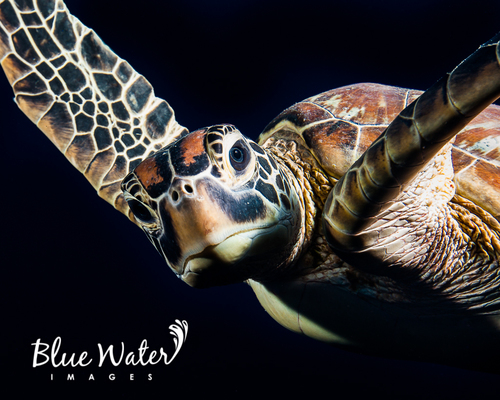
The green sea turtle, also known as the green turtle, black sea turtle, and Pacific green turtle, is a species of large sea turtle of the family Cheloniidae. It is the only species in the genus Chelonia. Its range extends throughout tropical and subtropical seas around the world, with two distinct populations in the Atlantic and Pacific Oceans, but it is also found in the Indian Ocean. The common name refers to the usually green fat found beneath its carapace, due to its diet strictly being seagrass, not to the color of its carapace, which is olive to black.
🛡️ Conservation Status
threatened
t
📌 Taxonomy
The green sea turtle is a member of the tribe Cheloniini. A 1993 study clarified the status of genus Chelonia with respect to the other marine turtles. The carnivorous Eretmochelys (hawksbill), Caretta (loggerhead) and Lepidochelys (ridley) were assigned to the tribe Carettini. Herbivorous Chelonia warranted their status as a genus, while Natator (flatback) was further removed from the other genera than previously believed.
The species was originally described by Carl Linnaeus in his landmark 1758 10th edition of Systema Naturae as Testudo mydas. In 1868, Marie Firmin Bocourt named a particular species of sea turtle Chelonia agassizii, in honor of Swiss-American zoologist Louis Agassiz. This "species" was referred to as the "black sea turtle". Later research determined Bocourt's "black sea turtle" was not genetically distinct from C. mydas, and thus taxonomically not a separate species. These two "species" were then united as Chelonia mydas and populations were given subspecies status: C. mydas mydas referred to the originally described population, while C. mydas agassizi referred only to the Pacific population known as the Galápagos green turtle. This subdivision was later determined to be invalid and all species members were then designated Chelonia mydas. The oft-mentioned name C. agassizi remains an invalid junior synonym of C. mydas.
📌 Etymology
The species' common name does not derive from any particular green external coloration of the turtle. Its name comes from the greenish color of the turtles' fat, which is only found in a layer between their inner organs and their shell. As a species found worldwide, the green turtle has many local names. In the Hawaiian language it is called honu,
📌 Distribution
The range of the green sea turtle extends throughout tropical and subtropical oceans worldwide. The two major subpopulations are the Atlantic and the eastern Pacific subpopulations. Each population is genetically distinct, with its own set of nesting and feeding grounds within the population's known range. Their native range includes tropical to subtropical waters along continental coasts and islands between 30°N and 30°S. Since green sea turtles are a migrating species, their global distribution spans into the open ocean. The differences in mitochondrial DNA more than likely stems from the populations being isolated from each other by the southern tips of both South America and Africa with no warm waters for the green sea turtles to migrate through. The green sea turtle is estimated to inhabit coastal areas of more than 140 countries, with nesting sites in over 80 countries worldwide throughout the year. In the United States Atlantic coast, green sea turtles can be found from Texas to Massachusetts. In the United States Pacific coast, they have been found from southern California north to the southernmost tip of Alaska. The largest populations of green sea turtles within the United States coastline are in the Hawaiian Islands and Florida. Globally, the largest populations of sea turtles are in the Great Barrier Reef in Australia, and the Caribbean Sea.
📌 Atlantic subpopulation
The green sea turtle can generally be found throughout the Atlantic Ocean. Although the species is most abundant in tropical climates, green sea turtles can also be found in temperate climates, and individuals have been spotted as far north as Canada in the western Atlantic, and the Cimbrian peninsula in the east. The subpopulation's southern range is known until past the southern tip of Africa in the east and Argentina in the western Atlantic. The major nesting sites can be found on various islands in the Caribbean, along the Atlantic coast of Florida in the United States, the eastern coast of the South American continent and most notably, on isolated North Atlantic islands.
In the Caribbean, major nesting sites have been identified on Aves Island, the U.S. Virgin Islands, Puerto Rico, the Dominican Republic, and Costa Rica. In recent years, there are signs of increased nesting in the Cayman Islands. One of the region's most important nesting grounds is in Tortuguero in Costa Rica. In fact, the majority of the Caribbean region's C. mydas population hails from a few beaches in Tortuguero. Within United States waters, minor nesting sites have been noted in the states of Georgia, North Carolina, and South Carolina. Florida's east coast is the largest nesting site in the United States. Hutchinson Island in particular is a major nesting area in Florida waters. Florida has several annual nesting periods when local beaches are closed or cordoned off to protect nesting sites. According to Green Sea Turtle Watch, in 2015 more than 37,000 green sea turtle nests were documented in Florida, a record number. In addition to sporadic distribution of nesting sites, feeding grounds are much more widely distributed throughout Florida. Important feeding grounds in Florida include Indian River Lagoon, the Florida Keys, Florida Bay, Homosassa, Crystal River, and Cedar Key.
Notable locations in South America include secluded beaches in Suriname and French Guiana. In the Southern Atlantic Ocean, the most notable nesting grounds for Chelonia mydas are found on the island of Ascension,
📌 Indo-Pacific subpopulation
, Hawaii|alt=Photo of turtle swimming towards surface with diver in background]]
In the Pacific, its range reaches as far north as the southern coast of Alaska and as far south as Chile in the east. The turtle's distribution in the western Pacific reaches north to Japan and southern parts of Russia's Pacific coast, and as far south as the northern tip of New Zealand and a few islands south of Tasmania. Significant nesting grounds are scattered throughout the entire Pacific region, including Mexico, the Hawaiian Islands, the South Pacific, the northern coast of Australia, and Southeast Asia. Major Indian Ocean nesting colonies include India, Pakistan, Sri Lanka and other coastal countries.
📌 Specific nesting grounds
]]
Nesting grounds are found all along the Mexican coast. These turtles feed in seagrass pastures in the Gulf of California. Green turtles belonging to the distinct Hawaiian subpopulation nest at the protected French Frigate Shoals some west of the Hawaiian Islands.
In the Philippines, green turtles nest in the Turtle Islands along with closely related hawksbill turtles.
In December 2007, fishermen using a hulbot-hulbot (a type of fish net) accidentally caught an , long and wide turtle off Barangay Bolong, Zamboanga City, Philippines. December is breeding season near the Bolong beach.
An annual presence is recorded in the Gulf of Panama, on the Isla Parida island. Local activists also moving some turtle nests to the coast, in the vicinity of the small town of Malena, to save and increase the turtle population in the safe place.
Indonesia has a few nesting beaches, one in the Meru Betiri National Reserve in East Java.
Off the north-eastern and northern coasts of Australia, the Great Barrier Reef has two genetically distinct populations; one north and one south. Within the reef, 20 separate locations consisting of small islands and cays were identified as nesting sites for either population of C. mydas. Of these, the most important is on Raine Island. In the Torres Strait there is a large rookery on Bramble Cay. The Coral Sea has nesting areas of world significance.
Major nesting sites are common on either side of the Arabian Sea, both in Ash Sharqiyah, Oman, and along the coast of Karachi, Pakistan. Some specific beaches there, such as Hawke's Bay and Sandspit, are common to both C. mydas and L. olivacea subpopulation. Sandy beaches along Sindh and Balochistan are nesting sites. Some off the Pakistani coast, Astola island is another nesting beach.
📌 Galápagos green turtle
The population that has often been known as the Galápagos green turtle have been recorded and observed in the Galápagos as far back as the 17th century by William Dampier. Not much attention has been paid to them due to the overwhelming research done on the Galápagos giant tortoises. Only over the last 30 years have extensive studies been performed covering the behaviors of the Galápagos green turtles. Much of the debate that has surrounded them recently is over the binomial classification of the species. At one point the name Chelonia agassizii was applied to this population as a separate species.
Three possibilities have arisen from their unique characteristics: agassizii is a separate species from C. mydas, it is a subspecies of green sea turtle, or it is simply a color mutation. However, this is possibly a case of political taxonomy. As such the three major international checklists that cover turtles of the world Reptile Database the checklist of Fritz and Havas (2007) all consider this a junior synonym.
📌 Ecology and behavior
]]
As one of the first sea turtle species studied, much of what is known of sea turtle ecology comes from studies of green turtles. The ecology of C. mydas changes drastically with each stage of its life history. Newly emerged hatchlings are carnivorous, pelagic organisms, part of the open ocean nekton. In contrast, immature juveniles and adults are commonly found in seagrass meadows closer inshore as herbivorous grazers.
📌 Predators and parasites
]]
Only some human beings and the larger sharks feed on C. mydas adults. Specifically, tiger sharks (Galeocerdo cuvier) hunt adults in Hawaiian waters. The tiger shark is the main predator of the green turtle as it will prey on green turtles of all sizes. The tiger shark has often been seen feeding on green turtles near their nesting beaches because they are restricted in the area of their nesting beaches and vulnerable to predation. Juveniles and new hatchlings have significantly more predators, including crabs, small marine mammals and shorebirds.
Green sea turtles have a variety of parasites including barnacles, leeches, protozoans, cestodes, and nematodes. Barnacles attach to the carapace, and leeches to the flippers and skin of the turtles, causing damage to the soft tissues and leading to blood loss. Protozoans, cestodes and nematodes lead to many turtle deaths because of the infections in the liver and intestinal tract they cause. The greatest disease threat to the turtle population is fibropapilloma, which produces lethal tumor growth on scales, lungs, stomach, and kidneys. Fibropapilloma is caused by a herpesvirus that is transmitted by leeches such as Ozobranchus branchiatus, a species of leech which feeds almost entirely on green sea turtles.
📌 Life cycle
]]
Green sea turtles migrate long distances between feeding sites and nesting sites; some swim more than to reach their spawning grounds. Beaches in Southeast Asia, India, islands in the western Pacific, and Central America are where green sea turtles breed. Mating seasons vary between populations. For most C. mydas in the Caribbean, mating season is from June to September. The males also return to their birthplaces in order to mate. These males that return to their homes know they will be able to find mates because the females born there also return to breed. By doing this, the green sea turtles are able to improve their reproductive success and is why they are willing to expend the energy to travel thousands of miles across the ocean in order to reproduce.
]]
Mating behaviour is similar to other marine turtles. Female turtles control the process. A few populations practice polyandry, although this does not seem to benefit hatchlings. After mating in the water, the female moves above the beach's high tide line, where she digs a hole in depth with her hind flippers and deposits her eggs. The hole is then covered up again. Clutch size ranges between 85 and 200, depending on the age of the female. This process takes about an hour to an hour and a half. After the nest is completely covered, she returns to the sea. The female will do this 3 to 5 times in one season. At around 50 to 70 days, the eggs hatch during the night, and the hatchlings instinctively head directly into the water. This is the most dangerous time in a turtle's life. As they walk, predators, such as gulls and crabs, feed on them. A significant percentage never make it to the ocean. Little is known of the initial life history of newly hatched sea turtles.
📌 Breathing and sleep
]]
Sea turtles spend almost all their lives submerged, but must breathe air for the oxygen needed to meet the demands of vigorous activity. With a single explosive exhalation and rapid inhalation, sea turtles can quickly replace the air in their lungs. The lungs permit a rapid exchange of oxygen and prevent gases from being trapped during deep dives. Sea turtle blood can deliver oxygen efficiently to body tissues even at the pressures encountered during diving. During routine activity, green and loggerhead turtles dive for about four to five minutes, and surface to breathe for one to three seconds.
Turtles can rest or sleep underwater for several hours at a time, but submergence time is much shorter while diving for food or to escape predators. Breath-holding ability is affected by activity and stress, which is why turtles quickly drown in shrimp trawlers and other fishing gear. During the night while sleeping and to protect themselves from potential predators, the adults wedge themselves under rocks below the surface and under ledges in reefs and coastal rocks. Many green sea turtles have been observed in returning to the same sleeping location night after night.
📌 Physiology and sensory modalities
. Green sea turtles are the only sea turtle species that commonly bask on land. However, they are only known to do so in certain parts of their range. Basking occurs in both sexes.]]
[[File:Green turtle is using the sand to cool off edit 2.jpg|thumb|Green sea turtles sometimes throw sand on to their backs while basking. This prevents overheating of the body surface while they heat up their core temperature
📌 Unique characteristics and features
juvenile]]
Green sea turtles can reach up to 40 miles per hour when swimming, making them the fastest sea turtle. The green sea turtles exhibit sex differences by their development and appearance. As adult turtles, males are easily distinguishable from the females by having a longer tail (visibly extending past the shell) and longer claws on the front flippers. The hatching time and sex of the turtles are determined by the incubation temperature of the nest. Hatchings occur more quickly in nests that are warmer than nests that are in cooler conditions. Warm nesting sites above 30 degrees Celsius favor the development of females, whereas nesting sites below 30 degrees Celsius produce males. The position of the egg in the nest also affects sex-determination. Eggs in the center tend to hatch as females due to the warmer conditions within the nest.
Green sea turtles play an essential role in the ecosystem in which they live. In the seagrass beds, the turtles feed on the seagrass by trimming only the top and leaving the roots of the plant. Through their feeding technique, the turtles help to improve the health and growth of the seagrass beds. The healthy seagrass beds that the turtles provide give habitat and feeding grounds for many species of fish and crustaceans. On the nesting beaches, the green sea turtles provide key nutrients for the ecosystem through their hatched egg shells. In their coral reef habitat, the green sea turtles have a symbiotic interaction with reef fish, including the yellow tang. The yellow tang fish swims along with the turtle and feeds on the algae, barnacles, and parasites on its shell and flippers. This species interaction provides food for the yellow tang and provides a necessary cleaning and smoothing of the turtle's shell. This cleaning helps the turtles swim by reducing the amount of drag and improves their health.
📌 Importance to humans
, Florida|alt=Black-and-white photo of several turtles set on their backs]]
Historically, the turtles' skin was tanned and used to make handbags, especially in Hawaii. Particularly for this species, the turtle's fat, cartilage, and flesh, known as calipee, are sought as ingredients for making turtle soup, a popular 19th-century English and American dish. Bali has been importing sea turtles since the 1950s, as its own turtle supplies became depleted. The mostly Hindu Balinese do not eat the eggs, but sell them instead to local Muslims.
Commercial farms, such as the Cayman Turtle Farm in the West Indies, once bred them for commercial sale of turtle meat, turtle oil (rendered from the fat), turtle shell, and turtle leather made from the skin. The farm's initial stock was in large part from "doomed" eggs removed from nests threatened by erosion, flooding, or in chemically hostile soil. The farms held as many as 100,000 turtles at any one time. When the international markets were closed by regulations that did not allow even farm-bred turtle products to be exported internationally, the surviving farm became primarily a tourist attraction, supporting 11,000 turtles. Initially started as Mariculture Ltd., then Cayman Turtle Farm Ltd and subsequently branded Boatswain's Beach, in 2010 the farm's brandname was changed to Cayman Turtle Farm: Island Wildlife Encounter.
Sea turtles are integral to the history and culture of the Cayman Islands. When the islands were first discovered by Christopher Columbus in 1503, he named them "Las Tortugas" because of the abundance of sea turtles in the waters around the islands. Many of the earliest visitors came to the Cayman Islands to capture the turtles as a source of fresh meat during long voyages. The green turtle is a national symbol displayed as part of the coat of arms of the Cayman Islands, which also forms part of the national flag of the Cayman Islands. The country's currency uses a turtle as the watermark in its banknotes. A stylised sea turtle nicknamed "Sir Turtle" is the mascot of the national airline Cayman Airways and is part of the livery of its aircraft.
A ki'i pōhaku (petroglyph) of a green sea turtle (or honu) can be found on the Big Island of Hawaii in the Pu'u Loa lava fields. The green sea turtle has always held a special meaning for Hawaiians and this petroglyph shows its importance; it may date to when the Hawaiian Islands first became populated. The turtle symbolizes a navigator that can find his way home time after time. This symbol mirrors the real life of the green Hawaiian turtle as it will swim hundreds of miles to lay its eggs at its own place of birth. Though there are other myths as well, some Hawaiian legends say the honu were the first to guide the Polynesians to the Hawaiian Islands. Hawaiians revere the turtle and the legend of Kailua, a turtle who could take the form of a girl at will. In human form, she looked after the children playing on Punaluʻu Beach.
📌 Conservation
Sea turtles have moved from unrestricted exploitation to global protection, with some individual countries providing additional protection, although serious threats remain. In 2025, the International Union for Conservation of Nature (IUCN) reclassified the global population of green sea turtles from endangered to least concern, though some sub-populations remain a conservation concern.
📌 Threats
]]
Human action presents both intentional and unintentional threats to the species' survival. Intentional threats include continued hunting, poaching and egg harvesting. More dangerous are unintentional threats, including boat strikes, fishermen's nets that lack turtle excluder devices, pollution and habitat destruction. Chemical pollution may create tumors; effluent from harbors near nesting sites may create disturbances; and light pollution may disorient hatchlings. With chemical pollution present, there is a development of tar balls that is often eaten by green sea turtles in a confusion of their food. Tar balls cause the green sea turtle to ingest toxins that can block their guts and cause swelling of the tissue, displacing the liver and intestines. Habitat loss usually occurs due to human development of nesting areas. Beach-front construction, land "reclamation" and increased tourism are examples of such development. In addition, at least in the Southwestern Atlantic (Río de la Plata, Uruguay), exotic invasive species such as the rapa whelk Rapana venosa, were reported massively bio-fouling immature green turtles, reducing buoyancy, increasing drag, and causing severe injuries to the carapace. Because of these threats, many populations are in a vulnerable state.
]]
Pacific green turtles' foraging habitats are poorly understood and mostly unknown. These foraging grounds are most likely along the coast of Baja California, Mexico and southern California, in which these turtles have a high risk of incidental capture by coastal fisheries. The main mortality factor for these turtles is the shrimp trawlers in Mexico, in which many of these turtles go undocumented. Construction of new thermal power stations can raise local water temperature, which is also said to be a threat.
Green sea turtles are the most commonly traded species along Java's south coast and are sold in the form of whole, stuffed animals or turtle oil, locally known as "minyak bulus".
The geographer James J. Parsons' book titled The Green Turtle and Man played a special role in the conservation movement to save the species from extinction.
📌 Global initiatives
, Tokyo.]]
The International Union for Conservation of Nature (IUCN) has repeatedly listed green sea turtles in its Red List under differing criteria. In 1982, they officially classified it as an endangered species. The 1986, 1988, 1990, 1994, and the landmark 1996 edition of the IUCN Red List, retained the listing.
In 2001, Nicholas Mrosovsky filed a delisting petition, claiming some green turtle populations were large, stable and in some cases, increasing. At the time, the species was listed under the strict EN A1abd criteria. The IUCN Standards and Petitions Subcommittee ruled that visual counts of nesting females could not be considered "direct observation" and thus downgraded the species' status to EN A1bd—retaining the turtle's endangered status.
In 2004, the IUCN reclassified C. mydas as endangered under the EN A2bd criteria, which essentially states the wild populations face a high risk of extinction because of several factors. These factors include a probable population reduction of more than 50% over the past decade as estimated from abundance indices and by projecting exploitation levels.
On 3 May 2007, C. mydas was listed on Appendix I of the Convention on International Trade in Endangered Species (CITES) as a member of the family Cheloniidae. The species was originally listed on Appendix II in 1975. The entire family was moved to Appendix I in 1977, with the exception of the Australian population of C. mydas. In 1981, the Australian population joined the rest. The Appendix I listing prohibits commercial international trade in the species (including parts and derivatives). The Zoological Society of London has listed the reptile as an EDGE species.
In October 2025, the IUCN amended green turtle conservation status to "least concern", though some subpopulations remain at risk. The Mediterranean population is listed as critically endangered.
📌 Country-specific initiatives
, profile photo of turtle resting on bottom]]
In addition to management by global entities such as the IUCN and CITES, specific countries around the world have undertaken conservation efforts.
The Indonesian island of Bali has traditional uses that were considered sustainable, but have been questioned considering greater demand from the larger and wealthier human population. The harvest was the most intensive in the world.
Multiple protected areas of the Philippines have significant green sea turtle nesting and feeding sites. The most notable is Turtle Islands Wildlife Sanctuary, an UNESCO tentative site which encompasses an entire municipality and one of Southeast Asia's most important green sea turtle nesting sites. Other notable sites include the UNESCO tentative site of El Nido-Taytay Management Resource Protected Area and the UNESCO World Heritage Site of Tubbataha Reefs Natural Park. The species is protected under Republic Act 9147 or the Wildlife Resources Conservation and Protection Act, while the sites where they live and nest are protected under the National Integrated Protected Areas System Act.
Ecotourism is one initiative in Sabah, Malaysia. The island of Pulau Selingan is home to a turtle hatchery. Staff people place some of the eggs laid each night in a hatchery to protect them from predators. Incubation takes around sixty days. When the eggs hatch, tourists assist in the release of the baby turtles into the sea.
The Hawaiian subpopulation has made a remarkable comeback and is now one focus of ecotourism and has become something of a state mascot. Students of Hawaii Preparatory Academy on the Big Island have tagged thousands of specimens since the early 1990s. The Pakistani-branch of the World Wide Fund for Nature has been initiating projects for secure turtle hatching since the 1980s. However, the population has continued to decline. Karumbé has been monitoring foraging and developmental areas of juvenile green turtles in Uruguay since 1999.
In Mozambique, there are a number of initiatives to protect sea turtles. In the Primeiras e Segundas, WWF Mozambique has established a turtle tagging and protection program. The archipelago is a vital nesting area for green turtles, including Ilha do Fogo where Earth Legacy Foundation manage a turtle monitoring programme, and at Celdeira Island, where several nesting females have been tagged.
Cayman Turtle Farm located in Grand Cayman in the northwest Caribbean Sea is the first farm to have achieved the second generation of green sea turtles bred, laid, hatched, and raised in captivity. Since its beginning in 1968, the farm has released over 31,000 turtles into the wild, Captive-bred turtles released from the farm as hatchlings or yearlings with "living tags," have now begun to return to nest on Grand Cayman as adults. On February 19, 2012 the farm released the first 2nd-generation captive-bred green sea turtle equipped with a Position Tracking Transponder, or PTT (also known as a satellite tag). In addition, the farm provides turtle meat products to the local population for whom turtle has been part of the traditional cuisine for centuries. In so doing, the farm curtails the incentive to take turtles from the wild, which over the years in addition to the Cayman Turtle Farm's release of captive-bred turtles has enabled an increase in the number of turtles sighted in the waters around the island of Grand Cayman and nesting on its beaches.
In the Pacific, green sea turtles nest on the motu (islets) in the Funafuti Conservation Area, a marine conservation area covering 33 square kilometers (12.74 square miles) of reef, lagoon and motu on the western side of Funafuti atoll in Tuvalu.
On Raine Island, up to 100,000 nesting females have been observed in a season, with the cay producing 90% of the region's green turtles. However, the hatching rate declined in the 1990s, and a further decline in the population was threatened by the deaths of thousands of females as they struggled to climb the small sandy cliffs. In addition, as the shape of the island had changed over time, the spread of the beaches outwards had led to greater risk of inundation of the turtle nests. Between 2011 and 2020, a collaborative project by the Queensland Government, BHP (as corporate sponsor), the Great Barrier Reef Marine Park Authority, Great Barrier Reef Foundation, and Wuthathi and Meriam traditional owners, reshaped the island using heavy machinery in a way that gave the female turtles a smoother passage and reduced the risk of nest inundation. A sophisticated monitoring and research system, using 3D modelling, satellite technology and drones was employed, and monitoring continues.
, a project called "The Turtle Cooling Project" is being undertaken by scientists from the World Wildlife Fund Australia, University of Queensland, Deakin University and the Queensland Government. It is looking at the effect of global warming on northern green turtle breeding, in particular the effect of producing more female turtles owing to the higher temperatures. They are working in the area around Raine Island, Heron Island and Moulter Cay.
📌 Genetics
The genome of Chelonia mydas was sequenced in 2013 to examine the development and evolution of the turtle body plan.