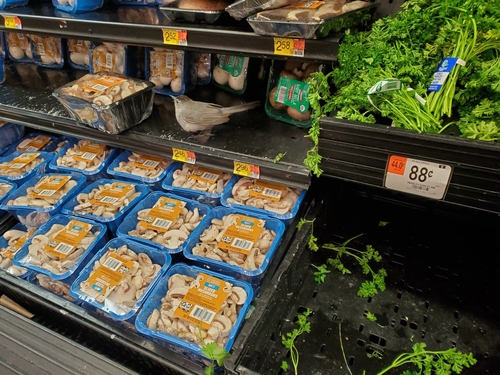
The gray catbird, also spelled grey catbird, is a medium-sized North American and Central American perching bird of the mimid family. It is the only member of the "catbird" genus Dumetella. Like the black catbird, it is among the basal lineages of the Mimidae, probably a closer relative of the Caribbean thrasher and trembler assemblage than of the mockingbirds and Toxostoma thrashers. In some areas it is known as the slate-colored mockingbird.
📌 Taxonomy
The name Dumetella is based upon the Latin term ("thorny thicket");
The species was first described by Carl Linnaeus in his 1766 edition of Systema Naturae. His original name Muscicapa carolinensis reflected the belief, widespread at that time, that the gray catbird was some sort of Old World flycatcher (presumably due to its remarkably plain coloration, not similar to other mimids).
Shaw and Wood used Louis Pierre Vieillot's specific name felivox. This means "cat voice", a contraction of Latin ("cat") and ("voice"). Vieillot, differing from the earlier authors, believed the bird to be a true thrush (Turdus).
Though mimids were widely considered Turdidae until the 1850s, this was not any more correct than treating them as Old World flycatchers, as these three families are distinct lineages of the superfamily Muscicapoidea. In the mid-20th century, the Turdidae and even most of the Sylvioidea were lumped in the Muscicapidae—but the Mimidae were not.
The smaller gray catbirds from Bermuda, which have proportionally narrow and shorter rectrices and primary remiges, were described as subspecies bermudianus ("from Bermuda") by Outram Bangs in 1901. However, this taxon was never widely accepted. In the present, the gray catbird is generally considered monotypic with no subspecies.
📌 Vocalizations
This species is named for its cat-like call. Like many members of the Mimidae (in particular mockingbirds), it also mimics the songs of other birds, as well as those of Hylidae (tree frogs), and even mechanical sounds. Because of its well-developed songbird syrinx, it is able to make two sounds at the same time. The alarm call resembles the quiet calls of a male mallard.
A gray catbird's song is easily distinguished from that of the northern mockingbird (Mimus polyglottos) or brown thrasher (Toxostoma rufum) because the mockingbird repeats its phrases or "strophes" three to four times, the thrasher usually twice, but the catbird sings most phrases only once. The catbird's song is usually described as more raspy and less musical than that of a mockingbird.
In contrast to the many songbirds that choose a prominent perch from which to sing, the catbird often elects to sing from inside a bush or small tree, where it is obscured from view by the foliage.
📌 Distribution and habitat
Native to most of temperate North America east of the Rocky Mountains, gray catbirds migrate to the southeastern United States, Mexico, Central America, and the Caribbean in winter; except for the occasional vagrant they always stay east of the American Cordillera. They are extremely rare vagrants to western Europe. Normally present on the breeding grounds by May, most leave for winter quarters in September/October; as it seems, this species is increasingly extending its stay in the summer range, with some nowadays remaining until mid-winter as far north as Ohio. The gray catbird is a migratory species. Spring migration ranges from March to May, and in the fall ranges from late August to November.
The catbird tends to avoid dense, unbroken woodlands, and does not inhabit coniferous, pine woodland. Catbirds prefer a dense vegetative substrate, especially if thorny vegetation is present. During the winter season, the catbird has an affinity for berry-rich thickets, especially within proximity of water sources.
📌 Behavior
===Breeding===
Their breeding habitat is semi-open areas with dense, low growth; they are also found in urban, suburban, and rural habitats. In the winter months they seem to associate with humans even more. These birds mainly forage on the ground in leaf litter, but also in shrubs and trees. They mainly eat arthropods and berries. In the winter months, Cymbopetalum mayanum (Annonaceae) and Trophis racemosa (Moraceae) bear fruit well liked by this species, and such trees can be planted to attract the gray catbird into parks and gardens.
They build a bulky cup nest in a shrub or tree, close to the ground. Eggs are light blue in color, and clutch size ranges from 1–5, with 2–3 eggs most common. Both parents take turns feeding the young birds.
📌 Feeding
Gray catbirds are omnivores, and approximately 50% of their diet is fruit and berries. They tend to peck more fruit than they can eat. They also eat mealworms, earthworms, beetles, and other bugs. In summer, gray catbirds will eat mostly ants, beetles, grasshoppers, caterpillars, and moths. They also eat holly berries, cherries, elderberries, poison ivy, bay, and blackberries. They also often peck the eggs of other species of birds, but it is unknown if they do this to supplement their diet or to reduce competition for food from other birds.
📌 Predation and threats
The gray catbird can be attracted by "pishing" sounds. Gray catbirds are not afraid of predators and respond to them aggressively by flashing their wings and tails and by making their signature mew sounds. They are also known to even attack and peck predators that come too near their nests. They also will destroy eggs of the brood parasitic brown-headed cowbird (Molothrus ater) laid in their nests by pecking them.
This species is widespread and generally plentiful, though its reclusive habits often make it seem less common than it is. It is not considered threatened by the IUCN due to its large range and numbers.
On Bermuda, however, gray catbirds were once very common, but their numbers have been greatly reduced in recent years by deforestation and nest predation by introduced species (including the great kiskadee Pitangus sulphuratus and the European starling Sturnus vulgaris). In the United States, this species receives special legal protections under the Migratory Bird Treaty Act of 1918.
📌 Articles
* Belles-Isles JC & Picman J. (1986). Destruction of Heterospecific Eggs by the Gray Catbird. Wilson Bulletin. vol 98, no 4. pp. 603–605.
* Boughey MJ & Thompson NS. (1976). Species Specificity and Individual Variation in the Songs of the Brown Thrasher Toxostoma-Rufum and Catbird Dumetella-Carolinensis. Behaviour. vol 57, no 1-2. pp. 64–90.
* Cimprich DA & Moore FR. (2006). Fat affects predator-avoidance behavior in gray catbirds (Dumetella carolinensis) during migratory stopover. Auk. vol 123, no 4. pp. 1069–1076.
* Dolby AS, Clarkson CE, Haas ET, Miller JK, Havens LE & Cox BK. (2005). Do song-phrase production rate and song versatility honestly communicate male parental quality in the Gray Catbird?. Journal of Field Ornithology. vol 76, no 3. pp. 287–292.
* Eddins ME & Rogers DT, Jr. (1992). Autumnal migration of the gray catbird through coastal Alabama. Journal of Field Ornithology. vol 63, no 4. pp. 401–407.
* Garvin MC, Basbaum JP, Ducore RM & Bell KE. (2003). Patterns of Haemoproteus beckeri parasitism in the gray catbird (Dumatella carolinensis) during the breeding season. Journal of Wildlife Diseases. vol 39, no 3. pp. 582–587.
* Garvin MC, Scheidler LC, Cantor DG & Bell KE. (2004). Abundance and temporal distribution of Ornithonyssus sylviarum Canestrini and Fanzago (Acarina: Mesostigmata) in gray catbird (Dumatella carolinensis) nests. Journal of Vector Ecology. vol 29, no 1. pp. 62–65.
* Hauber ME. (1998). Single-egg removal from an artificial nest by the gray catbird. Wilson Bulletin. vol 110, no 3. pp. 426–429.
* Hazelton PK, Robel RJ & Dayton AD. (1984). Preferences and Influence of Paired Food Items on Energy Intake of American Robins Turdus-Migratorius and Gray Catbirds Dumetella-Carolinensis. Journal of Wildlife Management. vol 48, no 1. pp. 198–202.
* Johnson EJ & Best LB. (1982). Factors Affecting Feeding and Brooding of Gray Catbird Dumetella-Carolinensis Nestlings. Auk. vol 99, no 1. pp. 148–156.
* Lent RA. (1992). Variation in gray catbird nest morphology. Journal of Field Ornithology. vol 63, no 4. pp. 411–419.
* Long R. (1981). Catbird Dumetella-Carolinensis in the Channel Islands. British Birds. vol 74, no 12. pp. 526–527.
* Marsh RL. (1977). Biochemical and Structural Adaptations in the Flight Muscles of the Migratory Catbird Dumetella-Carolinensis. American Zoologist. vol 17, no 4. pp. 894–894.
* Marsh RL. (1981). Catabolic Enzyme Activities in Relation to Pre Migratory Fattening and Muscle Hypertrophy in the Gray Catbird Dumetella-Carolinensis. Journal of Comparative Physiology B Biochemical Systemic & Environmental Physiology. vol 141, no 4. pp. 417–424.
* Marsh RL. (1983). Adaptations of the Gray Catbird Dumetella-Carolinensis to Long Distance Migration Energy Stores and Substrate Concentrations in Plasma. Auk. vol 100, no 1. pp. 170–179.
* Marsh RL. (1984). Adaptations of the Gray Catbird Dumetella-Carolinensis to Long Distance Migration Flight Muscle Hypertrophy Associated with Elevated Body Mass. Physiological Zoology. vol 57, no 1. pp. 105–117.
* Marshall JS, Glover PAR, Buechi KA & VanDruff LW. (2001). Nest reuse by a Gray Catbird. Wilson Bulletin. vol 113, no 3. pp. 337–338.
* Mollhoff WJ. (1976). Successful Parasitism of the Gray Catbird by the Brown-Headed Cowbird. Wilson Bulletin. vol 88, no 3. pp. 504–505.
* Pence DB & Casto SD. (1975). The Systematic Position of the Gray Catbird Dumetella-Carolinensis as Indicated by Its Nasal Mites Acarina Dermanyssidae Rhinonyssinae. Wilson Bulletin. vol 87, no 1. pp. 75–82.
* Powell MC. (1978). A Gray Catbird Nest in Duval County Florida USA. Florida Field Naturalist. vol 6, no 2.
* Preston K. (1989). Gray Catbird in County Cork New to Britain and Ireland Uk. British Birds. vol 82, no 1. pp. 1–3.
* Raynor GS. (1979). Weight and Size Variation in the Gray Catbird Dumetella-Cardinensis. Bird Banding. vol 50, no 2. pp. 124–144.
* Rivers JW & Sandercock BK. (2004). Predation by gray catbird on brown thrasher eggs. Southwestern Naturalist. vol 49, no 1. pp. 101–103.
* Scott DM. (1977). Cowbird Parasitism on the Gray Catbird at London Ontario Canada. Auk. vol 94, no 1. pp. 18–27.
* Stevenson HM & Menk GE. (1978). The Breeding Status of the Gray Catbird in Florida. Florida Field Naturalist. vol 6, no 1. pp. 13–15.
* Stewart PA. (1969). Prey in 2 Screech Owl Nests Otus-Asio Dumetella-Carolinensis Vermivora-Ruficapilla Melospiza-Melodia Microtus-Ochrogaster Heterodon-Platyrhinos. Auk. vol 86, no 1.
* Young AM. (1968). Predation by Catbirds on Dragonflies Dumetella-Carolinensis. Condor. vol 70, no 2.
-->
gray catbird
gray catbird
Category:Birds of North America
Category:Birds of Bermuda
Category:Birds of Canada
Category:Birds of the United States
gray catbird
gray catbird
Category:Articles containing video clips
Category:Extant Late Pleistocene first appearances
Category:Least concern biota of the United States