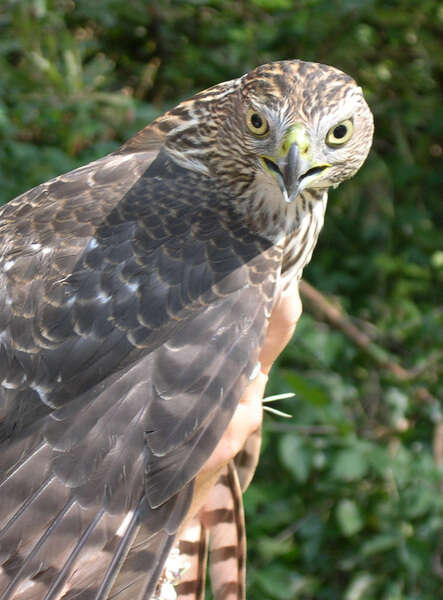
Cooper's hawk is a medium-sized hawk native to the North American continent and found from southern Canada to Mexico. This species was formerly placed in the genus Accipiter.
📌 Taxonomy
Cooper's hawk was formally described by the French naturalist Charles Lucien Bonaparte in 1828 from a specimen collected near Bordentown, New Jersey. He coined the binomial name Falco cooperii. The specific epithet and the common name were chosen to honor naturalist William Cooper, one of the founders of the New York Lyceum of Natural History (later the New York Academy of Sciences) in New York City. Other common names include big blue darter and chicken hawk. Cooper's hawk was formerly placed in the genus Accipiter. In 2024, a comprehensive molecular phylogenetic study of the Accipitridae confirmed earlier work that had shown that the genus was polyphyletic. To resolve the nonmonophyly, Accipiter was divided into six separate genera. The genus Astur had been introduced in 1828 by French naturalist Charles Lucien Bonaparte with the Eurasian goshawk (Astur gentilis) later designated as the type species. The genus was resurrected to accommodate Cooper's hawk together with eight other species that had previously been placed in Accipiter.
Apparently, Cooper's hawk was the earliest Astur known to colonize North America with a well-defined fossil record dating back perhaps 0.5-1 million years (the goshawk came second). Despite the considerably wider range of the sharp-shinned hawk, still considered as Accipiter, unlike the prior species, the ancestors of the sharp-shinned hawk came over the Bering Land Bridge last. Genetic testing has indicated that Cooper's hawk is quite closely related to the American goshawk, unlike the similar superficial characteristics of Cooper's to the sharp-shinned hawk, a close relative of the Eurasian sparrowhawk, which were likely obtained through convergent evolution. A natural hybrid of a Cooper's hawk and an American goshawk with intermediate physical characteristics was verified via genetic testing of a migrant juvenile in Cape May and was thought to indicate a northward expansion of Cooper's range into historic goshawk range.
No subspecies of Cooper's hawk is recognized. Genetic markers indicate that westerly birds such those in British Columbia are genetically different from those in the Upper Midwest, indicating that Cooper's hawks were restricted to at least two Pleistocene glacial refugia, with the Rocky Mountains acting as a natural barrier to gene flow between hawks on either side.
Several of the other similar, largish Astur species in the Americas appear to be closely related, possibly within a species complex, to Cooper's hawk, namely the bicolored hawk (A. bicolor), widely distributed from southern Mexico to Central and northern South America, and the Chilean hawk (A. chilensis). While some degree of obvious difference from these species is seen in appearance, distribution, and behavior, Almost certainly, Cooper's hawk would at least qualify as the paraspecies for Gundlach's hawk, and datum have indicated fairly recent colonization and hybridization between the two.
📌 Size
Cooper's hawks are fairly variable in size, with females being considerably larger than males.
Sexual dimorphism in Cooper's hawks is most reliably measured by wing size, talon size, then body mass. Although some margin of error exists, within a given region, dimensions of the two sexes never overlap (except marginally in tarsal and tail lengths). In general, Astur and Accipiter species are among the most sexually dimorphic in size of all raptorial birds, which may be due to greater male efficiency through smaller size and resulting agility in food gathering for the family group. Meanwhile, the female may be better suited to the rigors of brooding (including perhaps most nest defense) due to her larger size, also allowing the sexes to compete less on the same food sources.
In the American southwest, though, the species reportedly may reach its largest sizes, but little evidence shows that these birds are distinctly larger than the large-bodied individuals measured in the more northeasterly parts of the species' range in North America, from eastern North Dakota to New Jersey. The size variation evidenced in Cooper's hawks is apparently the most pronounced of any of the three North American species of Astur/Accipiter. Total length of full-grown birds can vary from in males and in females.
Among standard measurements, the wing chord may vary from in males and from in females. Wing chord is generally commensurate with body mass, largest in the heavier hawks of eastern North Dakota, where males averaged and females , and in Wisconsin, where males averaged and females (those from Cape May also being similar to those two samples).
📌 Voice
During breeding, Cooper's hawks may utter well over 40 claimed call variations, which would rank them as having among the most varied collection of such for any raptor, but probably quite subtle (marginal differences in harshness, clarity, tempo and volume). The typical call of a Cooper's hawk is a harsh, cackling yelp, which may be translated as keh-keh-keh, with males tending to have a higher-pitched, less-raspy, and faster-paced voice than females. A still more modulated and raucous version is given during the dawn chorus. -->Some evidence may indicate that individual hawks' voices may become lower pitched with age. The higher-pitched calls of the young may even extend to females nesting within their first year while still in immature plumage. Nonetheless, this female call also has been uttered in different contexts, such as during nest building or a "postural bowing" display, thus communicating to the male that approaching her is not dangerous for him (as Astur/Accipiter females can be dangerous to the much smaller males). Generally, Cooper's hawks are silent outside the breeding season.
📌 Confusion species
Accipiter and Astur species in North America are arguably the most vexing raptors to identify there. The other two species in North America are the smaller sharp-shinned hawk (Accipiter striatus) and the larger American goshawk (Astur atricapillus). Compared to the other two species, Cooper's hawks have an intermediate amount of feathering at top of the tarsus, as well as intermediate relative middle toe length and eye proportions, but have relatively the longest tail and the shortest wings of the three.
More unlikely to be mistaken for a Cooper's hawk are some buteonine hawks such as gray hawks (Buteo plagiatus), roadside hawks (Rupornis magnirostris) (in Mexico and points south) and broad-winged hawks (Buteo platypterus) which are all similar in size to Cooper's as well as the slightly larger red-shouldered hawk (Buteo lineatus). Even the most similar buteonine hawks have notably different proportions than a Cooper's hawk, possessing relatively much longer wings and a much shorter tail. Given reasonable views, all such species are fairly to extremely different in plumage even in juvenile form.
📌 Distribution and habitat
Cooper's hawk's breeding range extends from southern Canada to northern Mexico. In southern Canada, they breed (but do not normally winter) in the southerly parts of the provinces of British Columbia, Alberta, Saskatchewan, Manitoba, Ontario, Quebec to extreme southwestern Nova Scotia. The northern extent of their breeding range reaches roughly to Jasper National Park and Cedar Lake, Manitoba. Cooper's hawks can be found across the entirety of the contiguous United States at some part of the year, excepting the northernmost region of Maine. In Oaxaca, records show that the species has been recorded year-around with the first confirmed breeding reported in 2001.
In winter, they are found up to the southern half of Washington, the southern two-thirds of Idaho and Wyoming, southern South Dakota, the southern parts of Minnesota, Wisconsin, and Michigan, extreme southwestern Ontario, southwestern and southeastern New York, and New England through all but northwestern Massachusetts and to the southeastern part of New Hampshire.
📌 Behavior
. Although a rare behavior, several cases of juvenile hawks proning, wherein they lie on their backs along a branch (or rarely the ground), apparently as a form of sunning, have been reported. Cooper's hawks may walk on ground to gather nesting materials or hunt. Their well-developed muscle mass powers their flight, especially helping with acceleration during hunts and when carrying heavy prey, but some other nonraptorial birds may have similar muscularity relative to their mass, such as the Canada goose (Branta canadensis) and even pied-billed grebes (Podilymbus podiceps), and these ample muscle masses may be correlated with migratory (rather than hunting) behavior. Cooper's hawks have been recorded as engaging in an exaggerated, nighthawk-like flight in noncourtship circumstances, such as during migration or by recent fledglings.
📌 Migration
Like most diurnal birds of prey in the Northern Hemisphere, Cooper's hawks are partial migrants; they tend to be most migratory in the north and largely to partially sedentary elsewhere.
Migratory movements in the autumn are generally between late August and mid-October, peaking at the end of September and beginning of October in the East, but sometimes migration extends into November. Meanwhile, spring northward migration may vary from the end of February to May, with the last ones leaving Mexico in April and very late individuals were passing over South Texas in late May. Migration appears to be timed to coincide with that of the main prey, medium-sized birds.
At coastal migration sites like Cape May, first-year Cooper's hawks are far more regularly encountered than older individuals, with the juveniles accounting for 92.7% of recorded individuals of the species (juveniles of various other raptor species also generally seem to favor coastal over montane migration when it is available).
📌 Prey spectrum
as its prey]]
Cooper's hawks may consume well over 300 prey species from across the range. They are known to consume vertebrate prey almost exclusively. Birds in general form about 50–85% of diet. Another estimate was from for typical prey sizes, or about 5–37% the weight of males and 8–22% the weight of females, respectively. In Oregon, the mean prey sizes of Cooper's hawk was , with larger prey was taken than in greater proportion than their occurrence in the ecosystem (indicating that they locally search out relatively large prey). In Missouri, mean prey sizes were , averaging between amongst the main prey classes. Prey delivered by males averaged an estimated , while the average estimated size of prey delivered by females was . Overall, in Missouri, prey body masses were estimated to range from .
-->
📌 Birds
====Predation rates and passerines====
, one of the most widely taken prey for this species.]]
Birds are by far the leading prey for Cooper's hawks in most areas. A wide diversity of birds, considerably over 250 species, are known to be taken, constituting more than three-quarters of known prey species for these hawks. Although prior data mostly reflected the taking of adult birds, a study in Wisconsin revealed that Cooper's hawks may largely take young of the year, mostly fledglings but also not infrequently nestlings, during the breeding season. 74% of ageable bird prey in this study were young of the year. Similarly, in Michigan during summer, immature birds were more than 2.5 times more often delivered to Cooper's hawk nests than adult birds. In one case, a Cooper's hawk was seen to fly away with an entire occupied nest of American goldfinches (Spinus tristis). One study determined that birds that nest in the canopy level tended to nest fairly close to this hawk but those with mid-level, shrub level and ground level nests nested farther away, indicating that non-canopy-nesting birds are generally taken during the breeding season. Key to prey selection for Cooper's hawk is the availability and abundance of birds in a given region. Therefore, the extremely numerous American robin (Turdus migratorius) appears to be the most widely reported prey species. Robins were the leading prey species in northwestern Oregon, at 19.6% of 281 prey items, Lopez Island, Washington, 23.4% of 107 prey items, in Victoria, British Columbia, at 34.6% of 2896 prey items and prominent but ranked second also in California (Berkeley and Albany) food studies, 24.5% of 1057 prey items. The robin is regularly hunted in all seasons due to its commonality in exurban regions, with both adults, at estimated averages of when taken, and young being relatively easy for them to access. Beyond the common robin, nearly all thrushes in North America (excluding one species whose breeding range is largely north of Cooper's range and one rare, little-studied species) are opportunistically hunted by Cooper's hawks. The closest rival to the robin in being most widely taken as prey for Cooper's hawks may be the common starling (Sturnus vulgaris), a non-native bird in North America with mean weights when taken of . The starling was the main food for these hawks in Ithaca, New York, at 28.2% of 857 prey items, and Terre Haute, Indiana, at 56.5% of 57 prey items, and taken in large but somewhat secondary numbers in Missouri, Michigan, and Victoria, British Columbia. In the urban environment of Terre Haute, it was found that starlings were taken in almost the same proportion as starlings were of all birds observed by researchers (i.e. they were 60% of 2146 individual birds seen). California scrub jays (Aphelocoma californica) are regular supplemental prey in northern California studies as well. It was hypothesized that Steller's jays may be able to effectively confuse a Cooper's hawk by engaging in a chorus of calls at close range. In Arizona, Mexican jays (Aphelocoma ultramarina) are known to play a key role in flicker ecology by watching out for Cooper's hawks. Numerous other corvids may be hunted, including most overlapping jays, as well as the Clark's nutcracker (Nucifraga columbiana), black-billed magpie (Pica hudsonia), possibly yellow-billed magpie (Pica nuttalli) and a few species of crow. One black-billed magpie was caught and killed by a Cooper's hawk when attempting to mob the hawk. Incidents of predation have been witnessed on both young and adult American crows (Corvus brachyrhynchos). These hawks are also a potential predator of fish crow (Corvus ossifragus). However, crows are potentially dangerous prey to Cooper's hawks. Adult American crows are about the same size as a female Cooper's hawk and can potentially cause considerable damage to a lone raptor during group mobbing, being capable of inflicting damage with both their feet and bill. In at least one case, a murder of American crows was observed to drive a Cooper's hawk to the ground and possibly seriously injure it, although the fate of the hawk was not certain. In the Black Hills, although prey species were seldom identified, evidence showed that most regularly selected prey were assorted icterids. Even meadowlarks, such as the eastern meadowlark (Sturnella magna) which was the third most often selected prey in Ithaca, New York, and bobolinks (Dolichonyx oryzivorus) are taken despite their preference for grasslands well outside the typical habitats of Cooper's hawks. During harsh late winter weather in Wisconsin, Cooper's hawks were recorded to eke out an existence living largely off of pine siskins (Spinus pinus). In modern terms, certainly the most commonly taken small bird would be the non-native, house sparrow (Passer domesticus). Although not known to be taken profusely in all studied urban locales, house sparrows were the leading prey in a study from Michigan, were nearly a third of observed delivered prey at nests in Victoria, British Columbia (although were outnumbered by robins in prey remains) and reportedly were the leading prey in Milwaukee and in Grand Forks, North Dakota. Similar determent to the local nesting attempts of other small passerines such as warblers has also been reported. Chickadees seem to regard Cooper's hawks as a moderate threat based on their anti-predator response, with smaller raptors (which are presumably more dangerous) such as sharp-shinned hawks and small owls evoking a rather more aggressive response by chickadees. While usually the smallest avian prey selected by Cooper's hawks are various warblers (presumably taken mainly by male hawks), down to the size of the Wilson's warbler (Cardellina pusilla), even smaller passerines are known to be hunted. The smallest known avian prey species have included the verdin (Auriparus flaviceps), the ruby-crowned kinglet (Corthylio calendula) and the bushtit (Psaltriparus minimus). Even smaller birds, the hummingbirds, are essentially immune to Cooper's hawks (due to their own extreme agility) and were seen to incidentally benefit from nesting close to the hawks in California, due to a low risk of predators approaching while the hawks are present.
📌 Columbids and woodpeckers
, in New York City]]
Outside of passerines, almost certainly the most important avian prey type is the pigeon and dove family. Especially for those living in urban areas, Cooper's hawks have seemed to take to living heavily off of doves, particularly the abundant and widely found mourning dove (Zenaida macroura), at . Mourning doves appear to be hunted regularly in almost any part of the two species' mutual range. In the more rural north Florida, again the mourning dove leads the prey selection, accounting for 16.5% of 1100 prey items. Flickers are common prey elsewhere as well, such as in Ithaca, New York. All told, about 20 species (almost all in North America but for a couple poorly studied species) of woodpecker are known to be taken, ranging from the smallest, the downy woodpecker (Dryobates pubescens), to the largest, the pileated woodpecker (Dryocopus pileatus). Despite the regularity of predation of woodpeckers that are in the open, a study in British Columbia shows indicated Cooper's hawks seldom prey upon woodpecker nests, perhaps due to being unable to access their secluded, smallish nest holes, with the study showing that the most regular predators of such nests were various mammals (from deermice to bears).
📌 Galliforms
Certainly the most controversial aspect of Cooper's hawks are their predations upon galliforms. By far the most regularly selected types are New World quail. Coveys of quail that attempt to evade predators by running into thick vegetation (which can allow them to successfully escape many predators) often find that Cooper's hawks are undeterred by this, as the hawks may chase them either on the wing or on foot into thickets. However, one grouse was seen to successfully evade a hunting Cooper's hawk by diving belly first into about a foot of snow. Cooper's hawks are often regarded as perhaps the most regular natural predator of northern bobwhites (Colinus virginianus). Indeed, the rate of predation by Cooper's does appear to exceed that committed by other species of hawk as well as that by large owls. For instance, during winter in Wisconsin, Cooper's hawks were thought to kill 3.4–12.5% of the local bobwhite population. However, the bobwhite appears to be a secondary prey species in all known studies and no evidence shows that Cooper's hawk predation alone can deplete bobwhite populations, unlike causes directly contributable to man such as overhunting and habitat destruction. Most regularly found galliforms in North America (including well-established exotics such as chukars (Alectoris chukar) and common pheasants (Phasianus colchicus)) are known to fall prey occasionally to Cooper's hawks. These include assorted native grouse, including even the grassland-dwelling species (but excluding the more northerly distributed ptarmigans). Juveniles usually are the more vulnerable and more regularly taken of non-quail galliforms by Cooper's hawks, but the hawks can take adults quite regularly despite the prey's relatively large size. Adult male sharp-tailed grouse (Tympanuchus phasianellus), which average , are also known have been successfully preyed upon by Cooper's hawks. Even more impressive accounts show adult common pheasant estimated to weigh up to can be preyed upon by Cooper's hawks.
📌 Other birds
Beyond aforementioned families and orders, other types of birds are taken relatively infrequently. Usually moderate to low numbers of water birds are taken of any variety. About 5 species each of duck and heron, a dozen species of shorebird and a smaller assortment of grebes and rails are known in the prey spectrum. Adult ducks and herons of roughly equal weight to Cooper's hawks and other largish adult water birds including ring-billed gulls (Larus delewarensis) and American coots (Fulica americana) are sometimes tackled by these hawks. Particularly frequency was recorded of western cattle egrets (Ardea ibis) in north Florida, where the egrets were the fourth most regularly recorded prey species.
📌 Mammals
is an ample meal for a juvenile Cooper's hawk]]
A lower diversity of species and lower overall numbers of mammals are taken relative to bird prey but mammalian prey can be locally important. High balances of the relatively large eastern chipmunk (Tamias striatus) were found in studies from New York, Michigan and Wisconsin. In the western United States, fewer chipmunks are identifiable but such prey is fairly commonly detected. Mammals distantly related to chipmunks, such as ground squirrels (including antelope squirrels) can be taken in locally high volume. Golden-mantled and thirteen-lined ground squirrels are fairly small for ground squirrels, the earlier averaging , the latter of similar size. Tree squirrels are widely taken but secondary prey for Cooper's hawks. The smallish, roughly American red squirrel (Tamiasciurus hudsonicus) are not infrequent prey in northerly locations. About 36 red squirrels were recorded in the foods of Cooper's hawk in Ithaca, New York and these squirrels appear to have specific alarm calls that are provoked by these hawks, however the rate of predation by Cooper's appears to be low relative to other predators overall. Reported when taking red squirrels, male Cooper's hawks, being relatively small, may tear the prey into pieces that can be transported by them to the nest. Sizes of tree squirrels taken by Cooper's hawks were studied in Missouri. Eastern gray squirrels (Sciurus carolinensis) were taken of up to adult size but fox squirrels (Sciurus niger) were only taken as juveniles, as the adults, sometimes scaling up to , were apparently too formidable for Cooper's. The estimated weights of both the gray and fox squirrels taken in Missouri was , with the gray contributing 10.9% of the biomass. The first verified predation by a Cooper's hawk on a brown rat (Rattus norvegicus) was recently reported, also in British Columbia. One broad study found a somewhat unexpected correlation was found positively relating the previous summer's rodent density to the number of Cooper's hawks. This could be coincidental as rodent populations are probably driven by acorn production in the year prior to the rodent increases, and many of the birds taken regularly by Cooper's are also partially acorn dependent. Occasionally, Cooper's hawks may capture profitable mammalian prey such as rabbits and hares. Mainly, predation has been reported on the cottontail rabbits. Strong numbers of mountain cottontail (Sylvilagus nuttallii), averaging about when taken, were reported in northwestern Oregon (7.82% and fifth most regular prey species).
Mammals of other orders are taken quite infrequently, with a low volume of shrews and moles reported. Occasionally, Cooper's hawks are known to hunt bats. They are said to usually capture bats on the wing rather than search them out. Findings were that in Carlsbad Caverns that Cooper's (and also sharp-shinned) hawks were the most efficient avian predators of bats near the cave entrance (rating as more successful than most Buteo hawks and particularly more so than larger and less agile raptors like red-tailed hawks and large owls). Per observation in Carlsbad, due to their agility, Cooper's can match the evasive flight of a bat and may be successful in about 90% of observed pursuits. Apart from their well-documented predation of Mexican free-tailed bats (Tadarida brasiliensis), quite little is known about which bat species Cooper's hawk's may prey upon and at what level do the local hawks depend on such prey. Apart from caves, sometimes Cooper's hawks have been seen to capture bats in urbanized areas.
📌 Other prey
In some areas, respectable numbers of reptiles may be hunted. All told, nearly 30 species of reptile may be hunted by Cooper's hawks. Strong detection of reptilian prey is known in more western locations, especially farther south. In California, it was found that 69% of the diet was reptiles, most of which were assorted lizards (led by whiptail lizards, nearly of which were estimated to be found in one nest). In rural areas outside of Tucson, a fairly strong presence of (unidentified to species) spiny lizards, at 13% of 77 prey items, although overall in all areas of the Tucson metropolitan, reptiles constituted a lower 8% of the total 228 prey items. Most lizards encountered and hunted by Cooper's hawks are fairly small but, despite being more scarcely selected, snake prey may show greater size variation. Unlike with reptiles, there is little evidence that Cooper's hawk regularly hunts amphibians in any area, despite a few species being known in the prey spectrum. While some authors have posited that as much as 2.1% of Cooper's hawks' global prey consists of invertebrates, prevailing food studies tend to find scant to none evidence of such prey; however, a truly exceptional case of Cooper's hawks found dead in Arkansas showed that beetles and moths/butterflies each represented 12.5% of detected prey items.
📌 Interspecific predatory relationships
is chasing this young Cooper's hawk.]]
Of special interest is how Cooper's hawks live alongside sharp-shinned hawks and American goshawks. Little distinguishes outright the distribution, habitat, ecology and prey spectrum of sharp-shinned hawks from Cooper's hawks. Throughout the range of Cooper's hawk, sharp-shins may be found breeding, migrating and wintering in similar areas. So too is there much overlap between the ranges of Cooper's hawks and American goshawks, such as throughout southern Canada, the western United States, the Upper Midwest (and sometimes in the Northeastern United States) and during times of passage. The data from the Jemez Mountains of New Mexico was largely corresponding with the goshawk occurring in areas with a median of 781 trees per ha, Cooper's in areas with a median of 1229 trees per ha and the sharp-shins in a median of 1482 tree per ha. In the New Mexico data, goshawks used the largest trees with the lowest median canopy coverage (77.4% vs 78.4% for Cooper'
s and 83.1% for sharp-shins). In a study from northern Utah, Cooper's hawks were intermediate in most habitat characteristics, being at median elevation (), nest height ( against for sharp-shins and for goshawk) and in areas of intermediate branch density. However, Cooper's nests were the closest in Utah to areas disturbed by humans ( against for sharp-shinned and for goshawk), also closest to water ( against in sharp-shins and for goshawk). There is often some level of distinction in habitat between Cooper's and the sharp-shinned hawk. Compared to sharp-shinned hawks in Wisconsin and Oregon, Cooper's hawks use woods with fewer conifers, less dense stands of trees and stands with taller trees. Often, sharp-shinned hawk nests are lower in the trees and placed in much denser vegetation (often even the sharp-shins with their smaller frames themselves accidentally strike against branches while attempting to enter the nest), to hide the nest more sufficiently against predators. The habitat used by the two species in Missouri was less distinct (i.e. similar tree species used). However, the sharp-shinned hawk nests in Missouri were at much higher elevations, i.e. above sea level, than those of Cooper's (which were at a mean elevation of ; more surprisingly the stand density was higher here for Cooper's, at a mean of 935.7 trees per ha than those used by sharp-shins, at a mean of 599.3 trees per ha. There was some level of temporal differences between the two species in study in Indiana, where Cooper's hawks were generally active in the early morning but sharp-shinned hawks did not become active until later in the morning (hypothetically to avoid more severe intraguild predation by large owls due to its smaller size). In northern New Jersey, compared to nesting goshawks, Cooper's hawks used flatter lands that were closer to roads, other openings and human habitations. However, canopy coverage averaged high in New Jersey data for Cooper's, at 89.1%.
Cooper's hawk has a mean home range size that was comparable to the roughly half as large-bodied Eurasian sparrowhawk, at for Cooper's and for the sparrowhawk. However, data shows that in North America, the home range size of Accipiter and Astur species corresponded to the birds' body size, i.e. mean for the goshawk and mean for the sharp-shinned hawk. Many studies have contrasted the diet of Cooper's and sharp-shinned hawk in other areas as well, with the sharp-shinned hawk much more regularly selecting birds weighing under about , a fair amount overlap in birds of and weight classes but birds over this weight range are increasingly more often taken almost exclusively by Cooper's. Also, the sharp-shinned hawk appears to hunt more so birds that dwell at the canopy level in the woodlands (as opposed to ground to shrub height-dwelling birds) within the forest and prefers to attack in heavier cover than Cooper's seemingly. In southern Wisconsin, the food niche breadth was rather higher for Cooper's at 6.9 and the mean prey mass, at , was second only to the red-tailed hawk's. In the Wisconsin data, the red-shouldered, the broad-winged and rough-legged hawks (Buteo lagopus) as well as the northern harrier, peregrine falcon (Falco peregrinus) and the American kestrel all had lower mean prey masses.
Cooper's hawk is usually a top predator in the daytime but is not immune from attack by other predators. The most common predator of this species is almost certainly the great horned owl (Bubo virginianus). This rather large owl (averaging more than three times heavier than a Cooper's hawk) is known to regularly track down fledglings and adults as well as raid the nests of other birds of prey. Many records show great horned owls will visit the nests of birds of prey and pick off the young nightly until the prey resource is exhausted (i.e. all young or sometimes adult birds of prey are killed). Furthermore, given the opportunity, great horned owls readily expropriate the nests built by the raptors they kill as their own. Both the young, especially around the time they leave the nest or are recently fledged, and adult Cooper's hawks are vulnerable to these owls. While little data has been collected on the overall effect great horned owls have on Cooper's hawk populations, it is known that for the larger, more formidable goshawk that as many as 40% of radiotagged juveniles within a study appeared to meet their demise via horned owls. Due to their threat level, the calls of great horned owls provoke a strong response from Cooper's hawks and banders and researchers usually use stimuli of great horned owls to attract a mobbing Cooper's hawks. Reportedly, Cooper's hawks will temporarily tolerate and possibly even cooperate with crows when one or the other spots a great horned owl in the daytime, both species appearing to join forces to mob the threatening owl out of the vicinity. Less is known about the range of nest predators. Among all known predators, only the raccoon (Procyon lotor) can be considered to rival the great horned owl as the most severe threat to nesting attempts, probably consuming mostly nestlings and eggs but also perhaps some older hawks. American crows are known to rob nests of Cooper's hawks as well, especially when the parents have been displaced by the crow's severe mobbing. Some resources have gone as far as to blame the kestrels decline directly on Cooper's hawk predation but subsequent data from the U.S. Breeding Bird Survey and the National Audubon Society Christmas Bird Count appear to discount this theory, instead linking the overall declines to inadvertent human causes. Cooper's hawk are also counted as a predator of merlins (Falco columbarius). The only confirmed accipitrid that Cooper's hawk have been known to prey upon is their smaller cousins, the sharp-shinned hawks. Furthermore, Cooper's hawks that came into the vicinity were considered potential predators and mobbed as such by nesting gray hawks.
Even more so than diurnal raptors, a wide diversity of owls are known to fall prey to Cooper's hawks. Despite the temporal differences of their activity, the intensive hunting methods of Cooper's hawks may allow them to access roosting owls more readily than other types of hawks. eastern screech-owls (Megascops asio), elf owl (Micrathene whitneyi), northern pygmy owl (Glaucidium gnoma), ferruginous pygmy owl (Glaucidium brasilianum), burrowing owl (Athene cunicularia), and northern saw-whet owl (Aegolius acadicus). Most impressively, an instance was observed where a Cooper's hawk appeared to have preyed upon an adult of the rather larger (averaging about ) barred owl (Strix varia).
📌 Breeding
===Breeding territory and prelaying behavior===
Cooper's hawk is a solitary bird apart from breeding and rare aggregations during migration. In Grand Forks, North Dakota, a single male has been recorded to successfully mate with two nearby females, with similar records from New Mexico. However, the breeding efforts in Grand Forks were found to be disproportionately producing males, seven to one. A Wisconsin study determined 19.3% of nestlings in a Milwaukee study area were from extra-pair couplings and that 34% of all broods included at least 1 extra-pair young. Despite their generally monogamous breeding system, Cooper's hawks are often rather inconsistent regarding breeding for life (as many other birds of prey do). While males are more or less devoted to same breeding sites throughout lifetime, 23% of adult females in Wisconsin moved to different nesting grounds from away, averaging , in subsequent years. Meanwhile, in Arizona, 3% of males and 10% of females displayed yearly breeding dispersal. However, in the urbanized areas of Tucson, evidence indicates that mate fidelity is higher than elsewhere. In Tucson, it was found that the mean distance of the mated pairs was only during the non-breeding season and 36 interactions were recorded almost all in the core range, indicating an unusually close perennial typical pair bond here. The rate of dispersal to a different breeding ground was a much higher at 68% in north Florida. In Arizona, birds of each sex were found to usually pair with like-age individuals. Pairs frequently high circle together. Sometimes frequently for a month or so, the pair will perform as such.
In Michigan, the density average was 1 pair per . 1 nest per in central Wisconsin, 1 nest per in northwestern Oregon and 1 nest per in eastern Oregon. Minimal distance between active nests is seldom less than . Distance between active nest on average was in both California and Arizona, in New York, in Kansas, in western Oregon and in eastern Oregon and in central Wisconsin. Mean distance between active nests in Illinois was . Rather small areas may be defended where hunting occurs near the nest. Home range for a Wisconsin male hawk is around during breeding and about during non-breeding. Breeding hawks in Oshkosh, Wisconsin had an average home range of . Slightly smaller home ranges were found for urban males in a California study, at a mean of , than in non-developed areas here, which showed a mean of . Huge male home ranges were found for breeding ones in New Mexico, at , and in north Florida, at , probably due to dispersed prey resources. Home ranges of females tend to constrict with age. An exceptionally pronounced case of this was in north Florida, where first year female home ranges went from up to about down to as little as . In central New York, the nest sites of various other woodland birds were surprisingly close to those of Cooper's hawks, though some of the nest were occupied by other birds of prey that are not regularly threatened by these hawks (though flickers, one of the birds most at threat by the hawks, were fairly dispersed away from the hawk's nests). As in most accipitrids, copulation is brief (averaging about 4.5 seconds) and frequent (at around 0.9 per hour), with total copulations averaging per season about 372.
📌 Nest
This species builds a bulky platform nest, usually across and deep. Often the nest is shallower in conifers (i.e. deep in New York) and deeper in broad-leafed trees (averaging in New York). While sticks are almost always used, one unusual Florida nest was observed to be made largely of Spanish moss (Tillandsia usneoides). Often nests are lined by Cooper's pair with bark or odd bits of greenery. The male grabs at bark like prey, while the female, if participating, may tear off bark with her bill; the piles of bark may be up to 3 inches deep by the time eggs are laid, though green spray is added considerably less often than other species of hawks such as Buteo. Nest are often located at above the ground in the main fork or horizontal branch close to the trunk, though are sometimes up to above the ground, and in trees usually of in diameter. Usually nest sites are within plots of woodland of at least in size, with a canopy coverage usually over 64%, but can be much smaller in some urban vicinities. One unusual nest in North Dakota was in dense shrub rather than a tree and it even successfully produced fledglings. Another unconventional nesting area in North Dakota in the Little Missouri National Grassland and was recorded to have unusually open canopy, at a mean of 55%, and to be in a rather steep sloped area. An unusual nest site in Wisconsin was on a grapevine. Water access is of secondary import. Native white pine (Pinus strobus) was preferred in Massachusetts, at 58% of 48 nests, and in Pennsylvania, at 78% of 18 studied nests, and the most used tree in a study from Wisconsin as well, at 35% of 82 nests. Shortleaf pine (Pinus echinata), another native was preferred in Missouri (at 51% of 43 nests) and in Illinois (at 81% of 16 nests). Deciduous trees may be preferred elsewhere in the east, such as American beech (Fagus grandifolia) in New York (39% of 36 nests), oaks in Maryland (66%) and laurel oak (Quercus laurifolia) in north Florida (81% of 77 nests). Ponderosa pine (Pinus ponderosa) were preferred in eastern Oregon (53% of 15 nests) as well as in New Mexico. In the enormous redwood forests of California, all Cooper's hawk nests were in more modestly sized native tan-oaks (Notholithocarpus densiflorus).
It has historically taken to almost be a rule that Cooper's hawk uses a new nest site each year. Exceptionally, though, pairs have used the same nests for up to 4 years, though mostly records show up to 2 to 3 years of use when a nest is reused. Nest building usually takes about two weeks. When grass is found to be incorporated in nest structure, it is an indication that Cooper's is using a nest built by crows as they have never themselves been known to use grass. Oregon nests frequently incorporate mistletoe into the nest, more so those built by pairs with mature females rather than juvenile females. Their nest structure requires about 4.8 support branches. Data is conflicting on whether it is the male or the female who selects the nest site. Males were found to do 70% of the nest building in Wisconsin but the female does not consistently take a secondary role. Mostly, the male gathers nesting materials within of the nest. The male snaps off twigs with his feet to build with, though smaller twigs may be carried in the bill. After an early duet, at as early as 5:30, the male may start nest building at around 6:30. Later in the day, he will hunt, though females also hunt at this stage, much of her food is brought by him. South-facing nests are thought to be avoided, possibly due to solar irradiance reducing soil moisture, tree density and shading or possibly due to the more deciduous local nature of north-facing nest sites. When using a prior years nest, the female reportedly selects and repairs it.
📌 Eggs
s (line 1), red-shouldered hawks (line 3) and red-tailed hawks (line 4).]]
Egg laying in New York is between after April 24 to June 26 (about 50% from May 10 to 20) with similar dates in New England and also from Ohio to Minnesota. Similar laying dates were also found for Ontario as well as in British Columbia, but more laying date variation was found for the latter province. Data shows that mean egg laying times in Wisconsin may be shifting earlier by up to 4–5 days in different years, but the current mean is 1.3 days. Similar shifts may be occurring in New York state as well. From New Jersey to Virginia, egg laying may be from April 7 to May 23 (about 52% from April 29 to May 11), with similar dates on the opposite coast, from Washington state to California. The mean clutch initiation, in 57 clutches from North Dakota was mid-May and, though pairs arrive more than a month before that, the mean dates are consistently 2–3 weeks later in nests at other similar latitude in British Columbia and Wisconsin. It was determined in Maryland that egg-laying and other mean dates rival or are even later than the longer distance migrating broad-winged hawk, and are much later in general than other Buteo hawks here. The clutch size averages anywhere from about three to five. 7 of 266 clutches in early museum records were 6 egg clutches while one 7 egg clutch was recorded in Arizona. Records of 2 egg clutches may usually be laid by yearling females. Clutch sizes were similar in Ontario, at around a mean of 3.4, and in North Dakota, at 3.5. In southern Illinois, the mean clutch size is 4.1. In British Columbia, the mean clutch size was a particularly high 4.43. A clutch of 5 may be laid in 10 days and hatch in a span of about 3 days. Some authors suspect that clutch size is functionally reliant on habitat quality. The eggs are pale sky blue, fading to dirty white, with a smooth texture. However, an occasional set is reported as lightly spotted. It is reported by some authorities that the spotted eggs are laid by a female that does so each year, however others opine that these are misidentified eggs that were laid by broad-winged hawks. The eggs may measure in height by by diameter (averaging in 121 from Ohio and 137 from New York, respectively). California eggs averaged in a count of 82. The average weight of eggs is (with a range of ).
📌 Parental behavior
Incubation starts with the laying of the third egg. Only 2 to 3 food deliveries daily are usually necessary during incubation but the male has to hunt constantly once the young are large, rarely plucking and no longer decapitating prey. Prolonged visits to the nest by humans, i.e. more than 30 minutes or around an hour, can cause temporary nest abandonment, and can be the cause of up to 1.2% of nest failures. During early incubation, the female often quietly flushes if a person comes up to nest tree or knocks on it but will sometimes call if someone climbs to the nest. After 2 weeks, she may begin to make "half-hearted" dives at the climber. After 3 or 4 weeks, some females still quietly flush but others grow increasingly aggressive with much variance in temperament. The aggressiveness increases around hatching, decreases for the first couple weeks after hatching, then quickly increases after 3 weeks. All dives at climbers are mock ones to early on but after the young are about 3 weeks old, either one of the pair may actually hit and draw blood from the climbers. Despite a reputation as a "somewhat aggressive" or even as being a hawk with a "very aggressive defense" towards humans in nest defense, the actual rate of attacks even at peak times seems to be very low and the reputation is thought to be fairly unearned. Various researchers consider this species less aggressive to intruders than sharp-shinned hawks and goshawks, and some even less so than red-shouldered hawks as well. Anti-predator behavior by parent Cooper's hawks against crows, red-tailed hawks and eastern gray squirrels were observed in Wisconsin to be surprisingly six times more often carried out by the male rather than the female. Female defensive attacks are sufficiently forceful enough to drive away more formidable predators such as bobcats (Lynx rufus) from the nest area. When large quadrupeds walk under the nest, the female may utter a semi-alarm call but does not leave the nest.
📌 Development of young
Sex ratio can skew towards male in eggs, nestlings and fledglings in about 54–60% in nests of Cooper's hawks in the region of Milwaukee. However the sex ratio corrected over time in the urban area to an even amount, though it is still skewed outside the city (skewed broods towards males occur in cases where the females may become too costly to bring up, needing longer development stages and more foods). There are similar cases of male skewed ratios recorded now in southwestern cities (i.e. Tucson and Albuquerque). Due to the female usually only beginning incubation with the third egg, the first three eggs often hatch on the same day, while the fourth and fifth eggs often hatch one (rarely up to three) day later. After they are about eight weeks old, they may start to hunt for themselves, but are usually still reliant on parents for food. The parents soon seem to lose interest in feeding the young.
Juveniles Cooper's hawks in mostly urban areas of Arizona wandered somewhat randomly it seems until they were about 2.5–3 months old, when they settled on a wintering ground, averaging for females and averaging in males away from their respective natal sites. Attempts to average mean dispersal distances within another study found farther than expected dispersal distances for Cooper's hawks from across the range. These were estimated at . Greater dispersal distances by female juveniles are probably meant to limit the likelihood of inbreeding. Cooper's hawks usually first breed at 2 years old but yearlings can often be reported to average at 6 to 22% of the breeding populations in short 3–6-year studies. Despite the considerable number of breeding young females, in Oregon, they averaged about 1 egg smaller and nearly a fledgling smaller than their older female counterparts; while results in Albuquerque were even more skewed towards breeding success for older females. Considerable numbers of juvenile Cooper's hawks breeding may be historically associated with high turnover within populations. Evidence from the Milwaukee area shows a significant reduction in more recent decades of two-year old or younger breeding hawks, which was indicative of a recovering population.
📌 Breeding success
The average of 117 successful laid clutches was 4.18 eggs laid, 3.53 nestlings in successfully hatched clutches and 3.08 young in 26 successfully fledged broods in the Northeastern United States and southeastern Canada. In Wisconsin in 2019, all of the eggs in a clutch of seven hatched and all of the young fledged. In North Dakota, better habitat such as upland forest showed much higher breeding success levels (at least 1 fledgling in 86% of 26 nests) than in poorer habitats such as narrow riparian strips, in which 1 fledgling was produced in 57% of 44 nests. It was found that adult female who mated with males who provisioned food at a higher rate produced 1.6 more fledglings on average. In Arizona and New Mexico, 23% of nests failed altogether and 56.5% of 23 nests in Wisconsin failed during incubation.
📌 Longevity and parasitism
Cooper's hawks can be a long-living bird. Some authors credit lifespans of up to 8 years of age in the wild. The oldest recorded bird recorded among migrants that bred in Oregon was 10 years and 5 months old. The oldest recorded breeding bird was a 12-year-old female in British Columbia while the oldest recorded wild bird was 20 years, 5 months old, banded in migration. However, the mean age at death recorded in 136 banded Cooper's hawks was 16.3 months. It was estimated for the species that the mortality rate in the first year of life for these hawk is 71–78% while it about 34–37% in the subsequent years. The annual survival rate in Albuquerque was 27–38% for female immatures. Hunting accidents can frequently cause injury, especially in the form of potentially hobbling bone fractures, or sometimes can kill Cooper's hawks, especially those living in urban areas. In Indiana and Illinois, mortality from collisions were somewhat more prevalent in Cooper's hawks than in sharp-shinned hawks but instances of predation on immature sharp-shins were three times more prevalent than predations on immature Cooper's. Some mortality from West Nile has been reported, unsurprisingly. Fatal infections of the herpes virus have been recorded at least twice in Cooper's hawks. Cooper's hawks, along with great horned owls, had the greatest seroprevalence of Avipoxvirus among several raptorial birds in Illinois.
An extremely high amount of Trichomoniasis was found in nestlings in southeast Arizona. The bacteria was recorded in 95% of urban Cooper's hawk nestlings (though only 8% of non-urban ones) and caused about 50% of recorded nestling deaths, probably roughly doubling the nestling mortality rate compared to the non-urban areas. Adults are less vulnerable to Trichomoniasis infections but there was no variability to be found by sex, time of year or by location. In Wisconsin and British Columbia only 2.7% of 145 studied nestlings had Trichomoniasis. A high balance of the bacterial disease Mycoplasma gallisepticum, common to birds who frequent bird feeders, was found in Cooper's hawks (transmitted from their prey) studied in Illinois (the highest of any six raptor species studied) however effective antibodies were found and no external infection was noted. 91% of 47 tested adults in Wisconsin had Leucocytozoon toddi and 62% had Haemoproteus but only 12% of 33 nestlings there had parasites. A similar blood parasite infection rate was found in northern New York (and California) as well. Compared to sharp-shinned hawks, while migrating off Lake Ontario, Cooper's hawks were found to have higher white blood cell counts (heterophiles, monocytes, and eosinophils) that may have made them more vulnerable to blood parasitism. Haematozoa infection rates were also higher in adults than they were in nestlings in Arizona. Blood parasites were recorded to be higher for later migrating Cooper's hawks in northern New York but were, on the contrary, higher in earlier migrating hawks in Marin County, California. Even rare parasites such as Sarcocystis may be found in wild Cooper's hawks, being apparently more prevalent in juvenile hawks and slightly more often afflicting females rather than males. Helminths were quite diverse in Cooper's hawks from Florida. In Minnesota and Wisconsin, several helminths were recorded and there was one instance of a tissue reaction from Serratospiculum as well as a case was reported of related Serratospiculoides in an injured Cooper's hawk in Yellowstone National Park.
📌 Status and conservation
===Historic status===
Cooper's hawks have had an erratic status throughout the 20th into the 21st centuries. Most Cooper's hawks reacted to heavy persecution by behaving with more shyness and elusiveness. However, several studies have determined that Cooper's hawk predation is not detrimental to healthy gamebird population, and that most of the blame must fall directly on overexploitation and habitat destruction of humans themselves, with a more recently quantified causal of changing climate further exacerbating the gamebirds' declines. Human hunting of Cooper's hawk declined when governmental protection of the species was instituted in the late 1960s (nearly two decades after some less controversial birds of prey species were protected in America). A considerable average reduction in eggshell thickness was measured to average at around 7%. A particularly severe reduction in eggshell thickness was recorded in New York state, at an average of 19.02%. The survival of the species, especially in the eastern part of the continent, was seriously questioned in the 1960s and 1970s. Nonetheless, 11 of 16 eggs in Arizona and New Mexico broke due to this cause. Subsequent to the prohibition of DDT use in North America, the population increased exponentially in the 1980s and 1990s and ultimately was thought to stabilize.
📌 Current status
In the 1990s, it was estimated that Cooper's hawks may number "well into six figures" due to their regular distribution over 8 million square kilometers. These estimates were gained cross-referencing the number of hectares per active nest, which was in the range of in the western states and in the Midwestern and eastern states, as well as data from Christmas Bird Counts and migration counts. Following their historic decline, Breeding Bird Surveys have tracked strong increases of the breeding population (upward trends from 1.2% in California to 4.4% in Pennsylvania) in six states, with a 2.2% increase overall, and similar trends in multiple other states. In many states (Arizona, California, Florida, Missouri, New Mexico and North Dakota) the numbers are probably similar or greater to those prior to 1945. It is thought that the population of Cooper's hawks in Wisconsin is nearly saturated relative to the landmass of the state, after a rough 25-fold increase since the late 1970s.
📌 Potential threats
Shooting is now a generally insignificant cause of mortality though is still sometimes reported. Despite the declining effect of pesticides on Cooper's hawk's overall population, lingering harmful effect from dieldrin has been indicated in some hawks in British Columbia and recently some hawks have been killed by the pesticide warfarin. Bioaccumulation of pollutants may still have considerable effect on this species. Lead poisoning can sometimes threaten Cooper's hawks, through lead bullets left in dead or injured game.
Most urban-related mortality for Cooper's hawks is likely to be collisions with manmade objects. These are mostly wire strikes (with or without resulting electrocution), automobile collisions and window strikes or with other parts of manmade structure while distractingly hunting. Other studies support that the number of fatal window and wire collisions of urban-living Cooper's hawks is "excessively high". Cooper's hawks found in the vicinity of airports are at risk of bird strike with aircraft, therefore 185 Cooper's were translocated away from these areas (the 5th most frequently translocated raptor species). A similar translocation effort away from the Los Angeles basin around the Los Angeles International Airport translocated 349 Cooper's hawks (about a fifth of all translocated raptors), apparently successfully. Cooper's hawks are sometimes displaced by the placement of wind farms, with studies indicating that Cooper's need about seven years to locally recover from such displacement. Synurbization has been detected in Cooper's hawks as, despite the dangers of various kinds of collisions, it has been found that in favorable urban areas, hawks of the species can seem to breed more closer to one another, gather more food and produce more young on average than those outside such areas. Even New York City has seen (if erratically present) since the late 1990s, a return of nesting Cooper's hawks.
population.]]
Logging may decrease some populations but the overall effect it has on Cooper's hawks is generally considered unknown. In the Black Hills, harvesting of ponderosa pines appears to be causing Cooper's, sharp-shins and goshawks to vacate large parts of the forest. It has been recommended that a buffer zone of at least , with a median estimated space needed of about , should be free from human disturbance or development to retain the protected nests of Cooper's hawks. Studies in New Mexico showed that these hawks are reliant on the conservation of riparian woodlands in much of the southern part of the state. Despite the large, productive and genetically diverse population of Cooper's hawks in Tucson, several authors have hypothesized, controversially, that the city is an ecological trap, due to the unsustainably high turnover for nestlings via Trichomoniasis-related mortality and for adults via frequent lethal collisions.
Quite few Cooper's hawks have ever been gathered for use in falconry. This hawk is fairly unpopular in falconry practices due to its high-strung personality and is additionally considered in such captive conditions as given towards "tyrannical", "hysterical" and "demanding" behaviors, even compared to its similarly disposed larger cousin, the American goshawk, which is fairly popular in falconry.
📌 Threat to conservation dependent species
Generally, Cooper's hawks hunt the locally common birds that are available and probably control some birds (such as the more numerous icterids and corvids) that may without the influence of natural predation risk overpopulation and potential harm to ecosystems. However, as an opportunistic natural predator of almost any North American bird smaller than itself, Cooper's hawk may inadvertently deplete populations of rarer, conservation-dependent species. The American kestrel, whose populations have experienced considerable decrease, may be one species which has suffered from the extensive predation of the recovered Cooper's hawk population. However, there is no evidence that Cooper's hawk predation is one of the leading causes of kestrel declines and data seems to indicate it is, at most, a localized threat. Similarly, Cooper's hawks occasionally prey upon other threatened bird species, and, although said predation is not a primary cause of concern, may exacerbate the already worrying condition of many declining North American birds. Some threatened species known to be thusly hunted by these hawks are greater prairie-chickens (Tympanuchus cupido), lesser prairie-chickens (Tympanuchus pallidicinctus), red-headed woodpeckers, Bell's vireo (Vireo bellii), Florida scrub jay (Aphelocoma coerulescens), wood thrush (Hylocichla mustelina) (Cooper's being identified as one three major nest predators along with blue jays and raccoons), golden-winged warbler (Vermivora chrysoptera), cerulean warbler (Setophaga cerulea) and golden-cheeked warbler (Setophaga chrysoparia).
📌 Images
File:Cooper's hawk immature.jpg|Cooper's hawk immature
File:Cooper's Hawk in California.jpg|Adult Cooper's hawk
File:Cooper's hawk feeding.jpg|Cooper's hawk feeding on a small bird